When Should You Pull Summer Plants From Your Greenhouse?

Fall garden cleanup is fairly straightforward outdoors. Frost arrives, warm-season plants die back, and the garden moves into its next season. Inside a greenhouse, the transition is not always so obvious. Your tomatoes may still be ripening. A pepper plant could have another flush of fruit coming. That cucumber vine may look a little tired but still be producing.

Meanwhile, you have trays of winter greens waiting for somewhere to go, and every week the sun sits a little lower in the sky. Start planning your winter garden now.
During our Fall Fest Owner Q&A, one gardener raised a question that comes up every fall: When do you finally give up on the summer plants in your Growing Dome? There is no single date on the calendar. In a Growing Dome, the better question is whether each plant is still earning its place.
Don't Let the First Frost Make the Decision for You
One of the advantages of gardening in a protected environment is that the first outdoor frost does not necessarily end your warm-season garden. Growing Dome Owners often continue harvesting frost-sensitive plants after outdoor gardens have shut down for the season. How long those plants remain productive depends on your climate, available sunlight, temperatures inside the Dome, the health of the plant, and what you want to grow next.
I’m playing the same judgment game, like a beauty pageant, with my outdoor plants. Have I overwintered them before? Do I have enough room and adequate light for them to survive, or will they go dormant? Can I start cuttings from them now or save their seeds? Which are the most valuable or look the healthiest? And in my outdoor garden case, the frost can make that decision for me. How much time do I have before it arrives?
Five Reasons to Let a Summer Plant Stay
1. It Is Still Producing
If a healthy warm-season plant is still producing something you want to harvest, there may be no reason to remove it yet. Production will generally slow as daylight decreases, but slower does not mean finished. Look at what is actually happening on the plant. Are flowers still developing? Is fruit continuing to ripen? Are you harvesting enough from it to justify the room it occupies or the water it requires? Your answer may be different for every plant in the Dome.
2. It Is Not Blocking Valuable Winter Light
In summer, tall plants and vines can provide useful shade. As the sun drops lower in the sky during fall, those same plants can cast long shadows across beds that need every bit of winter sunlight they can get. Before pulling a plant entirely, consider whether pruning could open enough light for what is growing underneath. Fall does not always require choosing between the summer garden and the winter garden. For a while, you may be able to grow both.

Winter greens like tatsoi and lettuce grow beside summer herbs like basil and verbena. In a small dome like this, you may want to harvest the basil before it bolts or you have a cold spell and start something else in its place. The verbena can be treated as a perennial that will lose its leaves.
3. The Plant Is Healthy
A productive plant is much more valuable when it is also healthy. By late summer and fall, some plants have accumulated months of stress. Leaves may be yellowing, disease may be spreading, or pest populations may be building.
A struggling plant that is producing very little may no longer deserve greenhouse real estate, particularly if keeping it creates problems for neighboring plants. Removing declining plant material can also make it easier to see what is happening elsewhere in the bed, improve access for pruning and watering, and give you a chance to address issues before winter.

This squash plant seems to be struggling, but it is trying to produce flowers, and there is a lot of room left in this dome for other plants. You could trim the leaves and give it a chance, but it may not be getting enough light because of the trellised plants nearby.
4. You Don't Need the Space Yet
Sometimes the simplest reason to keep a plant is that nothing else is waiting for its spot. If your winter garden is already established elsewhere in the Dome, there is little urgency to remove a healthy summer plant that is still producing.
Fall planting often begins while summer plants are still going. Root vegetables can be direct-seeded into open soil, while leafy greens can be started separately and transplanted as space becomes available. If you know you will need that sunny corner in a few weeks, it may make sense to start planning the transition before the summer plant is completely finished.
Your greenhouse size, bed layout, trees, and perennial plants all influence how much room you have to overlap the seasons.
5. It Still Fits Your Winter Goals
Not every Dome Owner gardens for maximum food production. You may be overwintering a favorite pepper plant, keeping herbs going as long as possible, maintaining a perennial, or experimenting to see just how long a tomato will produce. Those are perfectly valid reasons to keep a plant.

This Swiss Chard has already been well established and harvested throughout the summer. It looks healthy and can remain as established over the winter. The squash behind it may be removed or pruned to allow the chard more light and airflow.
When It May Be Time to Let It Go
Sometimes a plant is technically alive but no longer contributing enough to justify keeping it. If production has nearly stopped, remaining fruit is unlikely to ripen, pests or disease are becoming a problem, or the plant is shading winter growth, it may be time to say goodbye until next year.
There is usually a tradeoff. A pepper occupying a sunny corner may mean fewer greens. A tomato vine stretched across a trellis may reduce the light reaching seedlings below. An aging cucumber may take up vertical space that could support peas. There is no universally correct choice. Trust your gut.
You Don't Have to Pull the Whole Plant at Once
Before removing a plant, look at its structure. Tomatoes are a good example, depending on the variety. By fall, much of the worthwhile fruit may be growing higher on the vine while the lower portion consists mostly of old leaves and bare stems. Pruning those lower branches can accomplish several things at once. It allows more light to reach the soil, creates planting room underneath, improves access to the bed, opens up space for airflow, and lets the remaining tomatoes continue ripening above. This is one of the easiest ways to transition between seasons gradually.

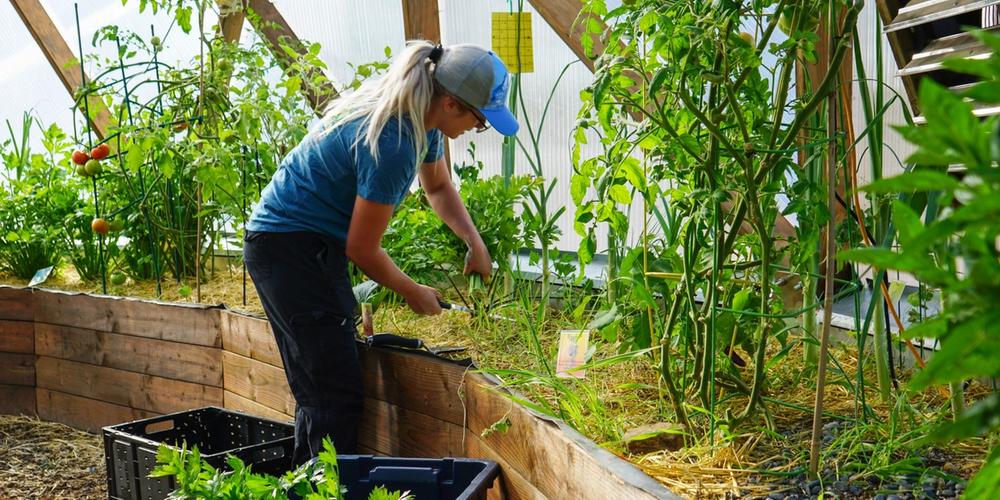
Harvesting lemon cucumbers and melons in mid-October. The tomatoes are still ripening and have been pruned to allow more light for the brassicas, lettuce, and seedlings growing below.
In our Growing Domes, we often think vertically, horizontally, and in succession. A tall summer plant may occupy the upper layer while newly planted greens, brassicas, or root vegetables establish underneath. As the summer plant declines and is eventually removed, the winter plants are already in place. That overlap can be especially useful because fall seedlings need time to establish before the shortest days of winter arrive.
Tomatoes, Peppers, Cucumbers, and Eggplants May Give You Different Answers
You do not have to treat every warm-season plant the same way.
Tomatoes
Tomatoes can continue producing surprisingly late in a protected greenhouse. If healthy fruit is still ripening, consider pruning heavily rather than immediately pulling the plant. Eventually, however, a huge vine supporting only a handful of slowly ripening tomatoes may no longer be the best use of your winter sunlight. For more on keeping tomatoes productive in a greenhouse, see our guide to growing tomatoes.
Peppers
Peppers may be harder to give up. A healthy pepper plant may continue producing for a long time, and some gardeners like me choose to overwinter favorite plants rather than starting from seed every spring. If you want to keep one, consider whether it can be pruned back or relocated if it is growing in a container. A large pepper in a permanent bed still needs to earn its place alongside the rest of the winter garden. Learn more about growing peppers in a greenhouse.
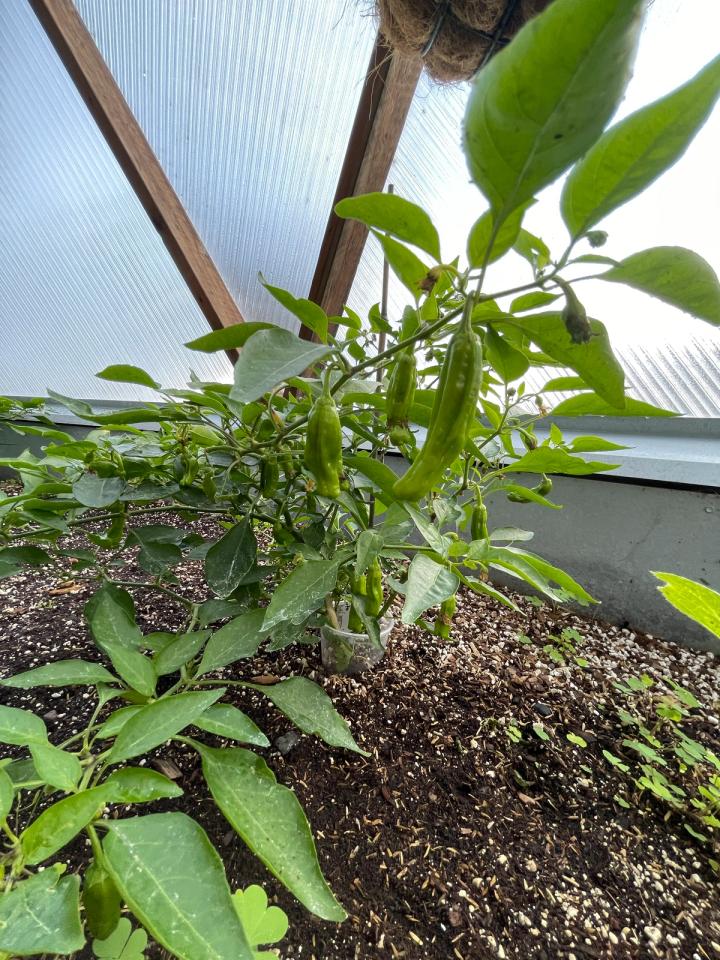
This shishito pepper is still vigorously producing.
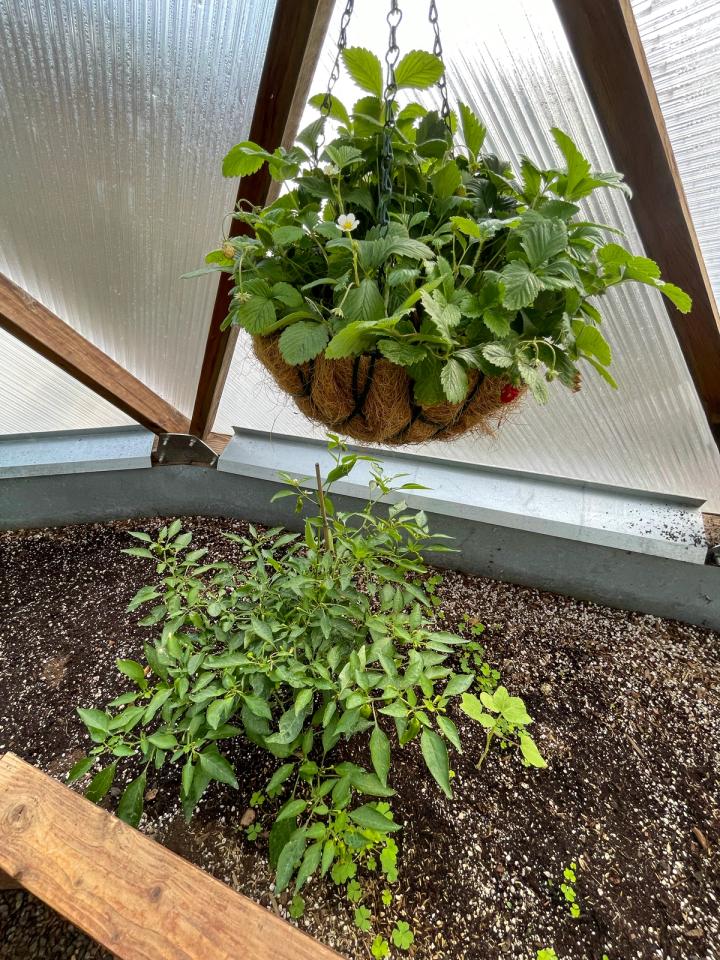
The strawberries in the hanging basket shouldn’t greatly affect the light reaching the plants below, and can be easily relocated.
There is ample room in the bed around this pepper to start establishing compatible winter plants.
Cucumbers
Cucumber vines often make the decision easier. Once production drops significantly and foliage begins declining, an aging vine can occupy a surprising amount of vertical space for very little return. Removing it can quickly open both light and trellis space. See our guide to growing cucumbers in a greenhouse.
Eggplants
Eggplants may also continue producing well into fall when conditions remain favorable. As with peppers, plant health and future plans matter. If the plant is healthy and you enjoy growing it, keeping it longer may be worthwhile. If production has stalled, you’re tired of finding ways to eat it, and winter vegetables are waiting, the balance may tip toward removal. Check out our recommendations for growing eggplant.

These Japanese eggplants, growing only a few feet away from the shishitos, are also producing heavily, but upon closer inspection, the leaves are hosts to spider mites. Root crops like beets, turnips, and onions may be a good replacement option after amending the soil from the eggplant’s heavy feeding.
What About Perennials, Fruit Trees, and Tropical Plants?
These plants require a different mindset because you are not deciding whether to end their season and start over next year. Fruit trees, grapes, perennial herbs, berries, tropical plants, and some ornamentals are part of the permanent or semi-permanent structure of many Growing Dome gardens. Instead of asking whether to pull them, consider what role they will play through winter.
Deciduous plants such as figs and grapes naturally lose their leaves, opening the canopy and allowing winter sunlight to reach plants below. Evergreen and tropical plants continue occupying that space, so pruning, placement, and the surrounding microclimate become more important. This is one reason plant placement matters so much when designing a greenhouse garden. The small plant you put into a sunny bed in spring may eventually become part of the winter canopy.
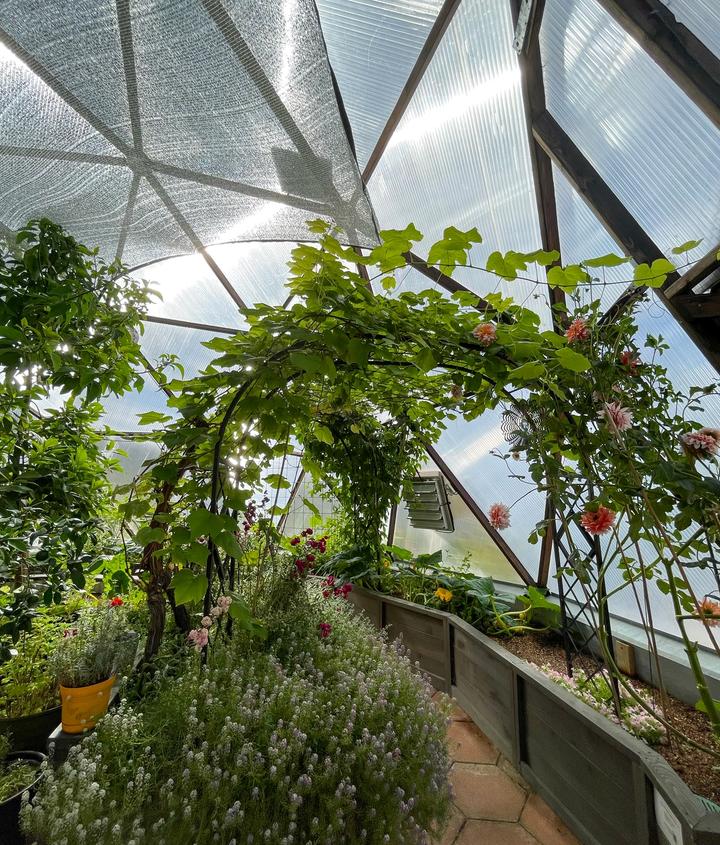
This grapevine should start losing its leaves in October, allowing more light for the beds below.
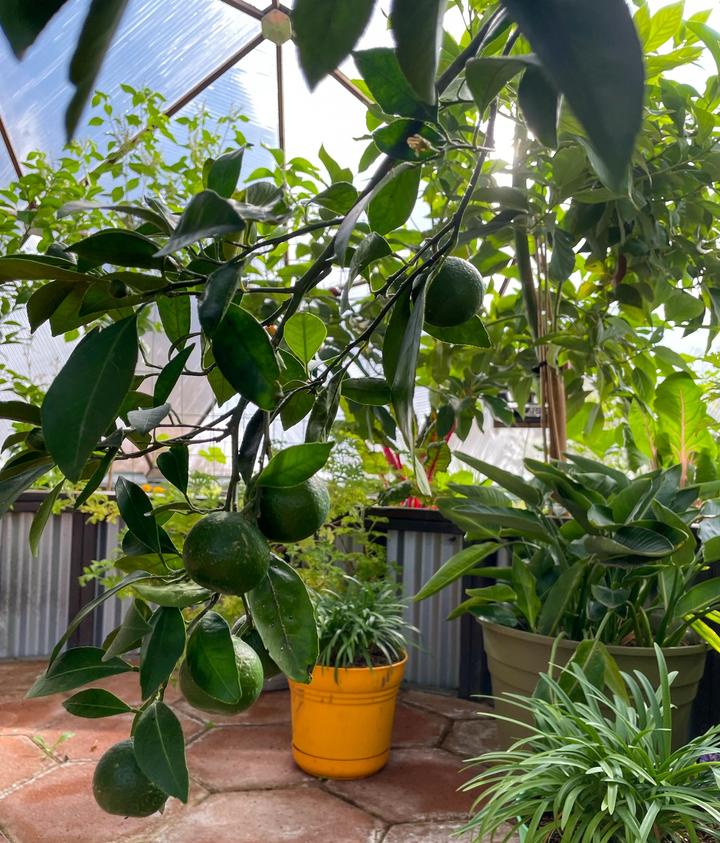
These mandarins are still ripening, but the tree is planted in a pot that can be moved for optimal light conditions.
We do add supplemental heat as needed to our 33’ dome because of the tropical plants we grow here: avocado, guava, citrus, etc.
Consider All of the Microclimates
Two identical tomato plants may deserve two different decisions depending on where they are growing. A plant against the south or west side of the Dome may receive very different fall light than one closer to the pond or north wall. A plant near another large perennial may be competing for sunlight, while the same variety elsewhere has plenty.
Temperature varies within the greenhouse too. Learning your greenhouse microclimates helps you make better decisions from one season to the next.
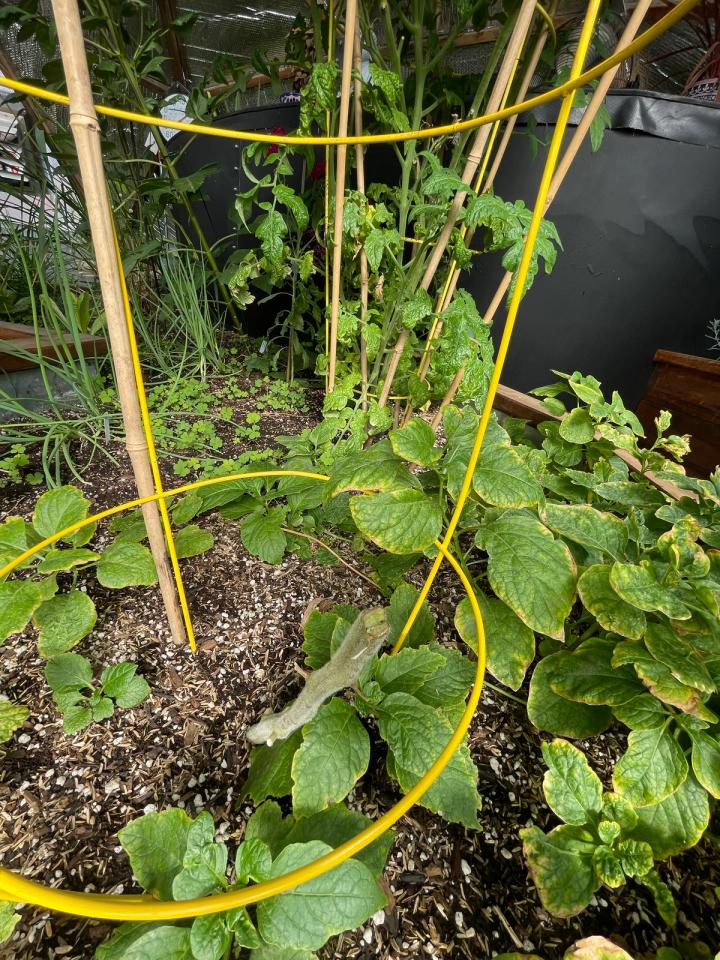
This tomato has been removed. All that remains is part of the stalk. Possibly it was done producing or was blocking light for the tomato behind it.
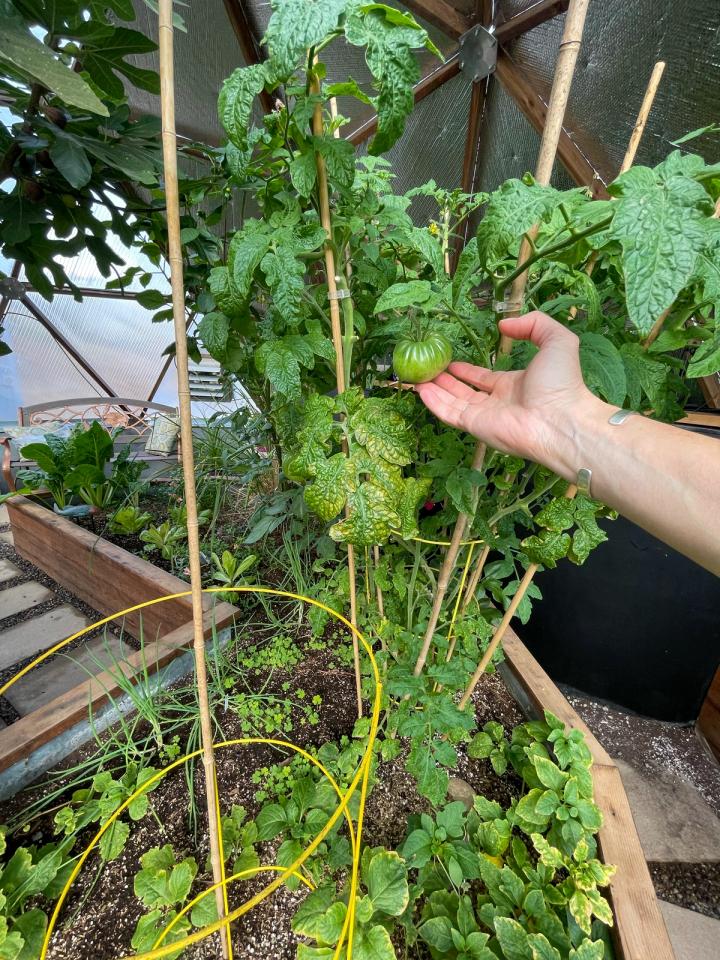
This tomato has been allowed to continue ripening. As the fig tree loses its leaves in this dome, you may also consider replacing this plant so it does not block light and heat from reaching the above-ground pond.
What Happens After You Pull a Plant?
Pulling a plant does not necessarily mean removing the roots. One of our former Growing Spaces gardeners often cut plants at the soil line and left the root system in place, whether she was clearing a spent annual or harvesting an entire plant.
The idea was to disturb the bed as little as possible. As old roots break down, they contribute organic matter and leave channels through the soil that can support air and water movement. It also means less disturbance to the soil structure and organisms living in the bed.
If you are ready to replant immediately, you may need to remove enough of the old root system to make room for the new plant. And if the plant showed signs of root disease or soil-borne pests, removing affected roots and plant material may be the better choice. If you are not replanting right away, there may be no reason to disturb the remaining roots. You can leave the bed alone until you are ready for its next use.
Let the Garden Tell You When the Season Has Changed
There is no official day when a Growing Dome switches from its summer garden to its winter garden. The transition often happens plant by plant. One tomato gets heavily pruned while another gets pulled. A pepper stays. A tired cucumber comes down. Lettuce fills the soil underneath them. A fig loses its leaves, and suddenly an entire section of the greenhouse is sunny again. That’s one of the advantages of gardening in a protected space. Some Dome Owners decide to take a break altogether, giving themselves and the garden a rest for the season.

This shady tunnel, consisting of tomato vines on one side and Mexican gherkins on the other, has shaded this pathway all summer, helping to keep the greenhouse cool.
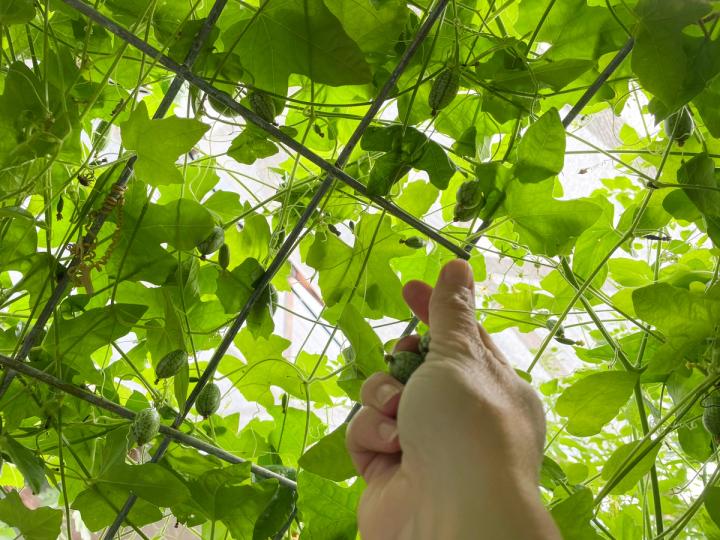
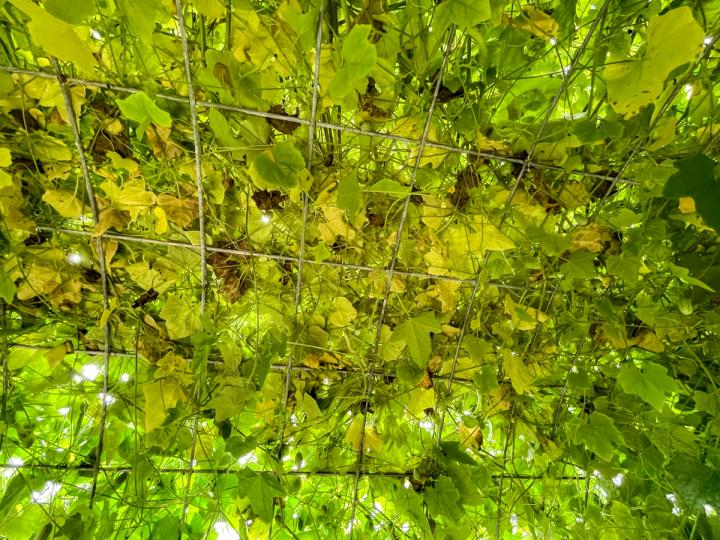
While there are still many of these cucumbers to harvest, in places, the dense foliage is turning yellow and dying out. Even with plenty of room in a 42’ Growing Dome, these plants may be replaced to allow more heat and light to reach the beds and pathways, or to make room for more winter-hardy plants like peas.
Rather than letting the first frost dictate the end of your season, you can watch what each plant is doing and decide whether it still belongs in the garden.

Seasonal Growing Tips & Greenhouse Advice
Monthly stories from our greenhouses, Growing Dome spotlights, and other gardening content


Share This

After 25 years in Pagosa Springs, I’m very familiar with Growing Spaces and have been interested in their geodesic dome design since moving to the area. I now reside on the other side of the Divide in Colorado’s San Luis Valley, where I continue to experiment with high-altitude, seasonal gardening. I got my start gardening in the challenging conditions Pagosa has to offer. In a previous role with the Southwest Land Alliance, I also contributed my graphic design services to the Geothermal Greenhouse Project along the San Juan River, which features three 42' Growing Domes. When I’m not working, I’m usually camping and exploring with my husband and our dogs, Juniper and Pigeon, or tinkering with another creative pursuit, whether that’s knitting, picking the mandolin, or trying something new. As part of the Growing Spaces marketing team, I enjoy sharing the knowledge, experiences, and stories of the Growing Spaces community and helping connect more people with resources for successful greenhouse gardening.
View full bioDownloads
Featured Categories
Seasonal Growing Tips & Greenhouse Advice
Monthly stories from our greenhouses, Growing Dome spotlights, and other gardening content
Featured Stories


Fall Plants for Winter Gardening


Powdery Mildew and Fungal Infections

Managing Winter Humidity in a Greenhouse

Featured Products


Sign up for The Happy Grower Newsletter
Once a month: stories from our gardens, Growing Dome spotlights, and what's in season in Pagosa Springs.