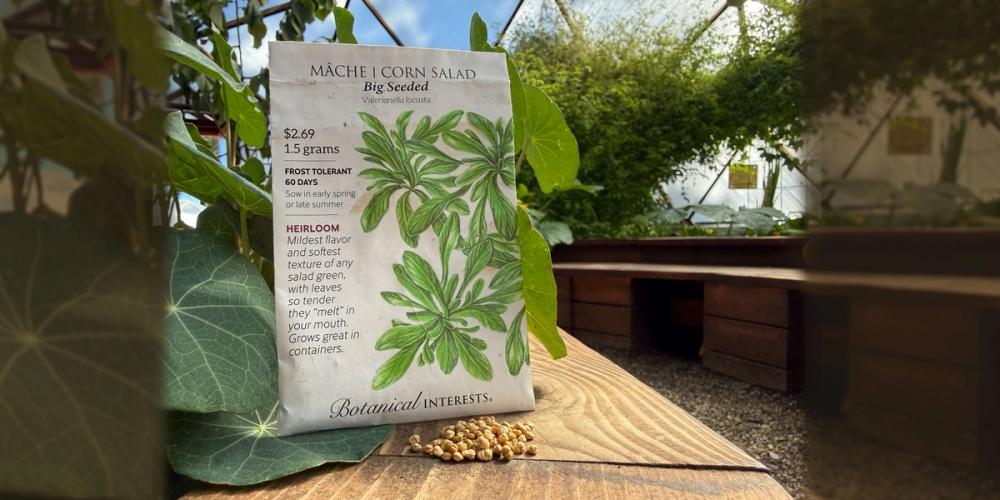
How to Grow Mâche in a Greenhouse or Garden

- Family: Caprifoliaceae
- Scientific Name: Valerianella locusta
- Common Name: Mâche, Corn Salad, Lamb’s Lettuce
- Type: Low-growing plant
- Light: Full to partial sun
- Soil pH: 6.0-7.0
- Soil: fertile, moist but well-drained soil
- Hardiness: Cold-tolerant annual.
Free Download
Growing Mâche
Mâche (pronounced mahsh) is an easy green to grow. While it was once considered a weed growing between crops, it is now considered a gourmet green! It tolerates cold temperatures, so it is a good winter crop for your greenhouse or garden depending upon your location.

What is the Best Place to Plant Mache?
Mâche grows best in cool conditions with full sun to partial shade. Outdoors, choose a sunny location during fall, winter, or early spring, with some afternoon shade where temperatures warm quickly.
In a traditional greenhouse, mâche is well suited to cool-season growing, but keep an eye on temperatures on sunny days. Even in winter, a greenhouse can warm enough to slow growth or interfere with germination.
In a Growing Dome, look for a bed that provides good light without excessive afternoon heat. The east side is often a good choice because it receives morning sun and tends to stay cooler than the south or west zones. During deep winter, the sunny south zone can also work well for this cold-hardy plant, provided temperatures remain suitable. As with any crop, the best location will depend on the microclimates within your own Dome.
Growing Spaces Tip
We've experimented with growing mâche in warmer areas of our demonstration Domes. A previous planting on the southwest side of our 33' Growing Dome bolted more quickly than desired, and we're currently trying mâche in the west-center bed of our 42' Dome. Based on our experience, we recommend choosing cooler growing areas to help extend the harvest.
Planting Mâche
Sow mache seeds in early spring or fall, and practice succession planting for a continuous harvest. Plant seeds ¼ inch deep, 1 inch apart, in rows 4–18 inches apart. Thin seedlings to approximately 3–4 inches apart as they grow. Some gardeners prefer to broadcast seeds for baby greens. Seedlings typically emerge in 10–14 days.

How Should You Care for Mâche?
Light: Full to partial sun. Provide afternoon shade in warmer climates. Full sun is fine in cooler climates during fall and winter.
Temperature: Mache is a cool-weather crop. Direct sow at soil temperatures of 41–68°F. Seeds may become dormant when soil temperatures rise above 70°F, and plant growth and quality decline as temperatures approach or exceed 75°F.
Soil: Mâche prefers fertile, well-drained soil that stays consistently moist but not soggy.
Water: The leaves are succulent and require even moisture. Do not let the soil dry out.
Pruning: Harvest mâche leaves individually as needed or harvest 1 to 2 inches above the soil using the “cut and come again” method.

What Can You Plant Near Mache?
Other cool-season crops can share growing space with mâche because they thrive under similar conditions. Consider arugula, cabbage, carrots, kale, leeks, radishes, spinach, or turnips. Give each crop enough space for light and airflow, particularly when growing through the shorter days of winter.

Mâche could find itself right at home in this winter garden with kale, brassicas, and chard, provided it receives enough sunlight.
Are There Plants to Avoid Growing Near Mâche?
There is not a well-established list of plants that are specifically incompatible with mâche. Instead, pay attention to competition for light, water, and growing space. Avoid placing mâche where taller or vigorous plants will heavily shade its low-growing rosettes, particularly during winter when daylight is already limited.
Managing Pests and Diseases
Aphids, slugs, and powdery mildew are issues to watch for. While aphids are not as likely in cold weather, they may stick around in a heated dome. Slugs enjoy cool, wet weather. If mâche is planted outside, the rain will render diatomaceous earth ineffective. Another method to prevent slugs is to place small containers of cheap beer around the plants. Dig a small hole to put the container in. The slugs will fall in and drown.
Good spacing and airflow can help reduce the risk of fungal disease, such as powdery mildew. In a greenhouse, monitor humidity and avoid leaving foliage wet overnight.
Harvesting Mâche
Mâche can be stored for 5–7 days in the refrigerator, but it is best to harvest as needed. Pick as many leaves as you need and be sure to wash them thoroughly to remove any bits of soil. Add mache to your salads, sandwiches, pasta, or even in smoothies!


The History of Mâche
The history of mache or cornsalad is that it was originally considered a weed! Peasants in Europe would forage between crops for these greens until it was introduced by King Louis XIV’s gardener into kitchen gardening. It appears in John Gerard’s Herbal of 1597. By the late 18th or early 19th century, mâche was being grown commercially and sold in London markets as a winter vegetable.
Mache Trivia
- Did you know that Thomas Jefferson was a fan and grew lamb’s lettuce in his Virginia garden?
- Mâche earned the name “corn salad” because it grew wild among grain crops, historically called “corn” in Europe.
- Mâche is in the honeysuckle family!
What Are the Health Benefits of Mâche?
Mache provides a number of vitamins and minerals. It contains vitamins A, B6, C and E in those small leaves. Other benefits include calcium, copper, folate, iron, magnesium, potassium and phosphorus.

Frequently Asked Questions
What are the ideal growing conditions for mâche plants?
Mâche grows best in cool temperatures with full sun to partial shade and consistently moist, well-drained soil. In a Growing Dome, the east side can be a good location for avoiding excessive afternoon heat, while sunnier areas may be suitable during winter. Consider the microclimates within your greenhouse when choosing where to plant.
What does mâche taste like?
Mâche is a succulent plant with a mild, nutty flavor. Some compare the texture to spinach.
Is mâche easy to grow?
Mâche greens are easy to grow. It was once considered a weed growing between crops and in some areas it is now considered a gourmet green! Mâche tolerates cold temperatures and is a good winter crop for your greenhouse or garden.
How do I harvest mâche?
You can harvest mâche by picking individual leaves as needed, allowing new leaves to continue growing from the center. You can also harvest entire rosettes by cutting the plant near the soil line. Succession planting will help provide a continuous supply throughout the growing season.

Seasonal Growing Tips & Greenhouse Advice
Monthly stories from our greenhouses, Growing Dome spotlights, and other gardening content


Share This

I joined Growing Spaces in 2021 as a gardener and now work with the Marketing and Social Media department. Formerly I was a kindergarten teacher and then worked as a Gardener and Volunteer Coordinator at Maui Nui Botanical Gardens in Hawai'i. Since moving to Colorado I have worked in the veterinary field and have been involved in therapy dog work visiting hospitals, schools and libraries with a national therapy group. My previous dog and I also worked as a crisis response team helping those affected by crises or disasters and were deployed through Hope Animal-Assisted Crisis Response (Hope AACR). Muppet and Maple are my current therapy dogs and we visit the library and hospital here in Pagosa Springs. Muppet is also a crisis response canine with Hope AACR. Outside of working and volunteering, I love growing native plants, flowers, berries, herbs and veggies at home, photography, hiking, horseback with my husband and hanging out with our dogs.
View full bioDownloads
Featured Categories
Seasonal Growing Tips & Greenhouse Advice
Monthly stories from our greenhouses, Growing Dome spotlights, and other gardening content
Featured Content

Understanding Greenhouse Microclimates


Managing Winter Humidity in a Greenhouse
Featured Products


Sign up for The Happy Grower Newsletter
Once a month: stories from our gardens, Growing Dome spotlights, and what's in season in Pagosa Springs.