Give Peas a Chance: Growing in Your Greenhouse

- Family: Fabaceae
- Scientific Name: Pisum sativum
- Common Name: Peas
- Type: Annual
- Light: Full sun, partial sun
- Soil pH: Neutral
- Soil: Loamy, well-draining soil
Free Download
Growing Peas
Peas are one of the easiest and most rewarding crops as they grow fast and are ready to harvest quickly. The vining varieties also provide shade for other plants. The three main types of peas are shelling peas (also known as garden peas), snow peas, and snap peas.

Where is the Best Place to Plant Peas?
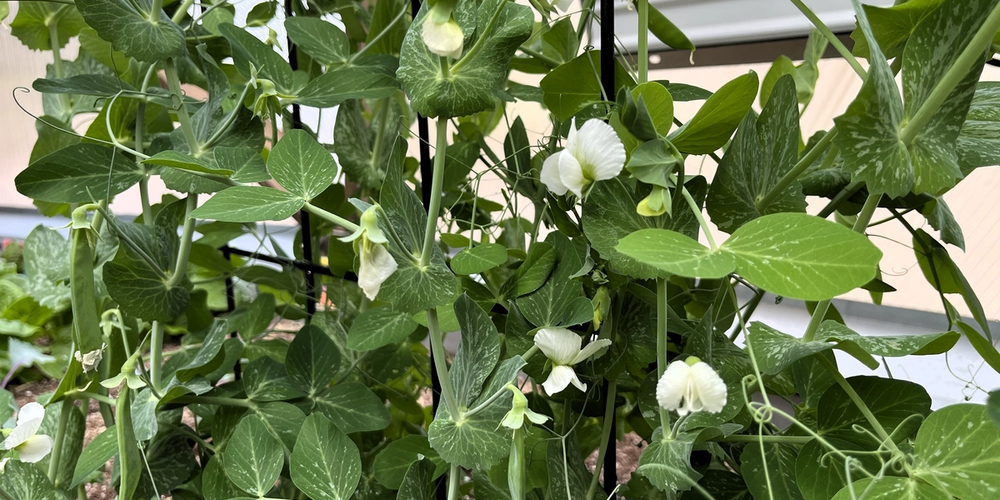
Many gardeners plant vining pea varieties, and those should be planted in an area with plenty of vertical space, as they can grow up to six feet tall. They do well in partial sun as they are not heat tolerant. Early spring is best for an early crop before the summer heat. Late summer or early fall is the best time to plant for a fall crop.
Bush pea varieties can grow up to three feet tall, so consider some type of fencing system or smaller trellis to support them as they grow.

Planting Peas
As a cool-season crop, peas can be planted once soil temperatures reach about 40°F, even before the last spring frost. Established plants tolerate light frosts, although hard freezes can damage tender growth. You can either start them inside if your dome greenhouse is unheated or start them in a cold frame in your greenhouse!

NOTE: Peas do not like their roots disturbed, so if you are starting them early, we recommend using biodegradable pots.
They can also be grown as a fall crop (plant in mid to late August), especially if you have a Dome greenhouse.
Plant seeds 1 inch deep and 2 inches apart. If you are planting rows of peas, follow the cultivar/seed-packet spacing.
We recommend putting a trellis system in place when planting either type of pea seeds to keep from disturbing their roots.

How Should You Care for Peas?
Light: Peas grow best in full sun but can tolerate partial shade, particularly where afternoon heat is a concern. As peas prefer cooler weather, consider planting them where they get morning sun rather than hot afternoon sun. They need 4-8 hours of sunlight daily.
Temperature: A cool-season crop, peas do best in 55-70°F. Plant in early spring around 6 weeks before the last frost or in early fall 8-10 weeks prior to the first expected frost.
Soil: Peas can tolerate many types of soil, but do best in loamy soil that is well-draining.
Water: Moist soil is best for peas, but if the soil is too moist, it can cause root rot. Keep the soil moist, but not soggy. Lightly water newly planted seeds and seedlings, keeping the soil consistently moist during germination. Once established, peas generally need about one inch of water per week, especially during flowering and pod development.
Pollination: Peas are self-pollinating!
Pruning: Pruning isn’t necessary for peas. Training your vining peas to grow up the trellis system is important. Be gentle with the tendrils!

What are the Best Companion Plants For Peas?
Alyssum, beans, corn, lettuce, radish, and spinach are some of the good companions for peas in the garden or greenhouse. Here’s a rundown on some of the benefits of companion plants.
- Alyssum can attract beneficial insects.
- Beans Like peas, beans are legumes that work with soil bacteria to fix atmospheric nitrogen, contributing to soil health over time.
- Corn Taller corn plants can provide some afternoon shade for peas as temperatures warm, although planting times need to be coordinated so the corn doesn't overshadow the peas.
- Lettuce can fill the space in front of the peas.

Plants to Avoid Growing Near Peas
Onions, garlic, and other alliums are generally not recommended as companions for peas because they may inhibit pea growth. It is best to plant these in other areas of your garden. Other plants to avoid planting near peas include chives, leeks, scallions, and shallots.
Managing Pests and Diseases
Unfortunately, peas do have a few pests that enjoy them as much as we do. Aphids love to dine on peas. Nasturtiums can be planted as a trap crop and removed when aphids arrive. Aphids can also be knocked off plants by spraying them with water or by using insecticidal soap. For outside plants, consider planting native plants to attract aphid predators.
Pea leaf weevils are small, grayish-brown beetles that feed on pea leaves, leaving distinctive semicircular notches along the edges. Young seedlings are especially vulnerable, and severe infestations can damage or destroy emerging plants. Protecting seedlings with row covers can help prevent feeding damage. Once pea plants have developed six or more leaves, they can generally tolerate some feeding without significant harm.
Root-knot nematodes are another pest to watch for as they infect plant roots. They can destroy young plants and decrease the yield of mature plants.
Watch for Powdery mildew and other fungal diseases. Plants need good air circulation, full sun and careful watering to help avoid these diseases. Watering the soil rather than spraying the leaves is a good control method.
Harvesting Peas
Peas are ready to harvest around 60-70 days after planting. Exactly when depends on the variety that was planted. Shelling peas are harvested when the peas are full-sized but still sweet and tender; snow peas when the pods are full length, and the peas inside are still small; snap peas when the pods are nearly filled but still tender and juicy.
If you harvest regularly, the pods will continue to develop. Peas can also be frozen to retain nutrients. Cool peas promptly and freeze them as soon as practical for best quality. More importantly, vegetables such as green peas should be blanched before freezing. So pick some peas to eat and peas to freeze!

The History of Peas
The exact origin of peas hasn’t been determined, however, it is one of the oldest domesticated crops. Wild peas are found in the Mediterranean region.
According to Wikipedia both the Greeks and Romans were cultivating peas from around 500 BC to 400 BC with notes of vendors selling hot pea soup on the streets of Athens. Yum!
In the Middle Ages, field peas kept the famine at bay as mentioned by Charles the Good, the Count of Flanders in Belgium. There are many more accounts of field peas, garden peas, snow and snap peas throughout history. With some fanfare green peas were presented from Genoa to the court of Louis XIV. Behold the mighty pea your Highness!
In the 18th century an amateur plant breeder, Thomas Andrew Knight developed influential wrinkled-seeded pea varieties prized for their sweetness. John Chisholm and his brother Charles developed the first pea harvesting machine.
An impressive history for these little legumes!
Pea Trivia
- Do you know what peas symbolize? Because a pod holds many seeds, peas are said to symbolize wealth, familial growth, and abundant harvest.
- Peas are the seeds of the plant so the pod is actually considered a fruit, not a vegetable. They are also considered to be legumes because they produce seeds within a pod.
- Legend has it that the origin of the phrase “green thumb” was because England’s King Edward was so fond of peas he kept six serfs shelling peas for him during the season. The serf that had the greenest thumb won a prize.
What Are the Health Benefits of Peas?
If you were like me and made to eat canned peas as a child you might be resistant to peas, but give peas a chance! Fresh picked peas from the garden are nothing like canned peas. Isn’t fresh always best? These legumes are in the same family as peanuts, lentils and chickpeas.
Peas are a great source of nutrients, fiber and protein. Fresh peas offer vitamin C and K, iron, folate, magnesium and zinc. The protein in peas helps to build muscles, regulate hormones and provide energy among other benefits. Peas are high in fiber which is a bonus for gut health. Another benefit of eating peas is that they are good for heart health, protect skin and eyes as well as helping prevent inflammation. That’s a power packed legume!
So consider adding peas to your garden early next spring or in late summer. Peas be with you and happy gardening!
Frequently Asked Questions
What are the best companion plants for peas?
A few of the best companions for peas are lettuce, marigolds, and nasturtiums.
Do peas need a trellis to grow?
Not all varieties of peas are vining; some are bush varieties. If you are growing a vining variety, place the trellis when you plant the peas so as not to disturb the roots as the plants grow.
How tall should a trellis be for vining peas?
Peas can grow up to 6’ tall and 1-3’ wide. More than one trellis may be needed depending upon how many pea plants are planted and how far apart they are spaced.
How difficult is it to grow peas?
Peas are easy-peasy to grow. They are cold-hardy and grow fast. They are a good beginning crop for children and adults!
When can I harvest peas?
Peas take around 60-70 days to reach maturity. There are different varieties that are harvested at different times. For example snow peas should be harvested as soon as the pods show peas developing. Other varieties are harvested when the pods show large, round peas inside.

Seasonal Growing Tips & Greenhouse Advice
Monthly stories from our greenhouses, Growing Dome spotlights, and other gardening content


Share This

I joined Growing Spaces in 2021 as a gardener and now work with the Marketing and Social Media department. Formerly I was a kindergarten teacher and then worked as a Gardener and Volunteer Coordinator at Maui Nui Botanical Gardens in Hawai'i. Since moving to Colorado I have worked in the veterinary field and have been involved in therapy dog work visiting hospitals, schools and libraries with a national therapy group. My previous dog and I also worked as a crisis response team helping those affected by crises or disasters and were deployed through Hope Animal-Assisted Crisis Response (Hope AACR). Muppet and Maple are my current therapy dogs and we visit the library and hospital here in Pagosa Springs. Muppet is also a crisis response canine with Hope AACR. Outside of working and volunteering, I love growing native plants, flowers, berries, herbs and veggies at home, photography, hiking, horseback with my husband and hanging out with our dogs.
View full bioDownloads
Featured Categories
Seasonal Growing Tips & Greenhouse Advice
Monthly stories from our greenhouses, Growing Dome spotlights, and other gardening content
Featured Stories


How the Growzebo™ Came to Life


How to Control Aphids in your Greenhouse


Featured Products


Sign up for The Happy Grower Newsletter
Once a month: stories from our gardens, Growing Dome spotlights, and what's in season in Pagosa Springs.