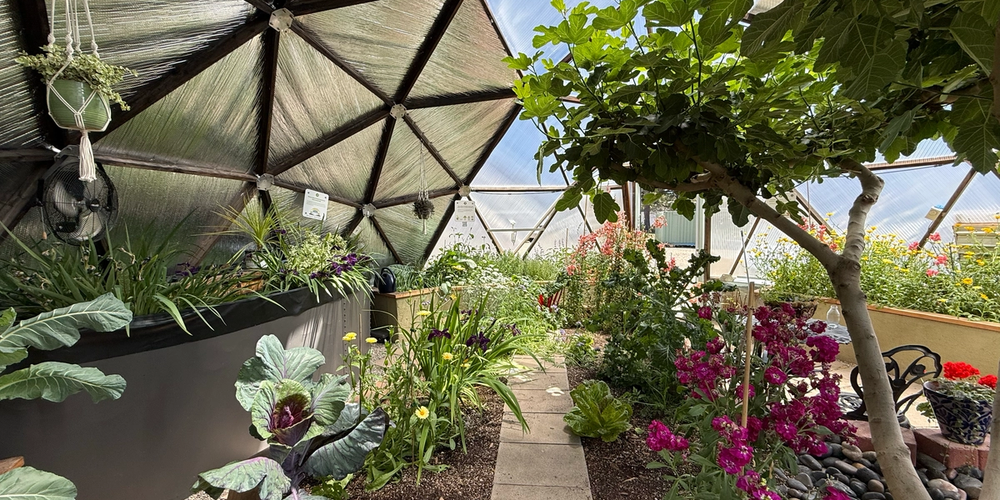
Greenhouse Microclimates: How Growing Zones Affect Plant Growth

Do Greenhouses Have Microclimates?
A greenhouse is, by definition, a type of microclimate. Its enclosed structure creates growing conditions that are different from those outside by influencing temperature, light, humidity, airflow, wind exposure, and moisture. However, the climate inside a greenhouse is rarely uniform.
Within that larger protected environment, there are often several smaller greenhouse microclimates. One area may be warmer, brighter, cooler, or more humid than another, even when the plants are only a few feet apart.
This is not a concept unique to the Growing Dome. Traditional greenhouses also develop microclimates. However, the shape and integrated systems of a Growing Dome can create several distinct and useful greenhouse growing zones that gardeners can learn to use intentionally.
What Creates a Greenhouse Microclimate?
Temperature, light, humidity, and airflow are the primary ingredients that shape microclimates in a greenhouse. Each can vary throughout a greenhouse based on the structure, its equipment, the surrounding environment, and the way the space is being used.

Conditions may change depending on:
- Distance from doors, vents, fans, or heaters
- The direction and intensity of sunlight throughout the day
- Height within the structure, since warm air rises
- The overall size and air volume of the greenhouse
- Proximity to glazing, insulation, thermal mass, or shade
- The amount of air movement around the plants
- Plant size and density
- Irrigation frequency and soil moisture
- Nearby trees, buildings, fences, or other sources of shade
These conditions also change with the seasons. A sunny location that provides welcome warmth during winter may become one of the hottest areas in the greenhouse during summer. An area near a door may experience greater temperature fluctuations during cold weather but provide valuable airflow when temperatures rise. Greenhouse microclimates are not fixed zones. They are changing patterns that gardeners can observe and use throughout the year.
How Greenhouse Size Affects Microclimates
The size of a greenhouse can influence how quickly conditions change and how distinct its microclimates become. Smaller greenhouses generally heat up and cool down more quickly because they contain less air volume. Opening a door, turning on a fan, or experiencing a sudden change in outdoor temperature can affect the entire space relatively quickly.
In a compact greenhouse, the conditions near the glazing, door, or vent may also influence a greater percentage of the growing area. There may be less distance between a plant and an exterior wall or source of airflow.
Larger greenhouses usually contain a greater volume of air, which can help slow temperature changes. At the same time, they may develop more distinct greenhouse microclimates because there is greater distance between the center of the structure and its glazing, vents, fans, heaters, doors, or thermal mass. For example, plants near an exterior wall may experience more intense sunlight and greater temperature fluctuations, while plants closer to the center may remain more protected and temperate.
Greenhouse size does not determine whether microclimates exist. Every greenhouse has them. Size simply influences how quickly conditions change, how far the effects of greenhouse features extend, and how noticeable the individual growing zones may become.
Growing Spaces offers six standard Growing Dome sizes, each with a different footprint, height, and internal air volume. You can compare Growing Dome greenhouse sizes to understand better how each structure may fit your space and growing goals.
Plants Help Create Microclimates Too
The greenhouse structure is only part of the equation. Plants themselves can significantly change the conditions around them.
Large plants and closely planted beds can shade the soil and smaller crops beneath them. As plants release moisture through transpiration, they can increase humidity in the surrounding area. Wet soil, ponds, irrigation systems, and damp pathways can also influence humidity and temperature.

Dense foliage may create a cooler, more humid pocket, but it can also restrict airflow. Without adequate circulation, these areas may become more vulnerable to fungal diseases, pests, and condensation. UMass Amherst explains that moisture released by plants and soil can raise greenhouse humidity and later condense on cooler leaves and glazing.
This is why the climate inside a greenhouse changes as the garden matures. A newly planted greenhouse will behave differently from the same greenhouse later in the season when vines have reached the ceiling, trees have filled out, and beds are covered with mature plants.
Microclimates in a Traditional Greenhouse
In a traditional rectangular greenhouse, microclimates often appear as hot spots near the roof or along walls receiving intense sunlight.
Areas near doors and vents may be cooler, while corners or spaces blocked by dense foliage may develop stagnant air. Plants near the glazing may experience greater temperature swings than plants farther inside, and heaters or fans can create warmer, cooler, drier, or breezier zones depending on their placement.
The size and shape of the structure can affect how pronounced these differences become. A small greenhouse may change temperature quickly from one end to the other, while a larger greenhouse may have several distinct areas that respond differently to sunlight, airflow, heating, and cooling.
These differences are not necessarily problems. Once identified, they can help determine where different crops are most likely to perform well. The important thing is to recognize that a greenhouse does not have one single climate.
The Growing Dome Difference
The Growing Dome has its own collection of microclimates, but several aspects of its design help make these zones especially distinct and usable. The curved structure, above-ground pond, reflective north wall insulation, 5-wall polycarbonate glazing, passive vents, intake and exhaust fans, shade cloth, and undersoil system all influence conditions throughout the greenhouse. Together, these features create several interconnected growing zones that can support plants with different needs.
The size of the Growing Dome also affects how these zones behave. In smaller Growing Domes, conditions may change more quickly, and the influence of the pond, glazing, doors, vents, and fans may extend across a larger percentage of the space.
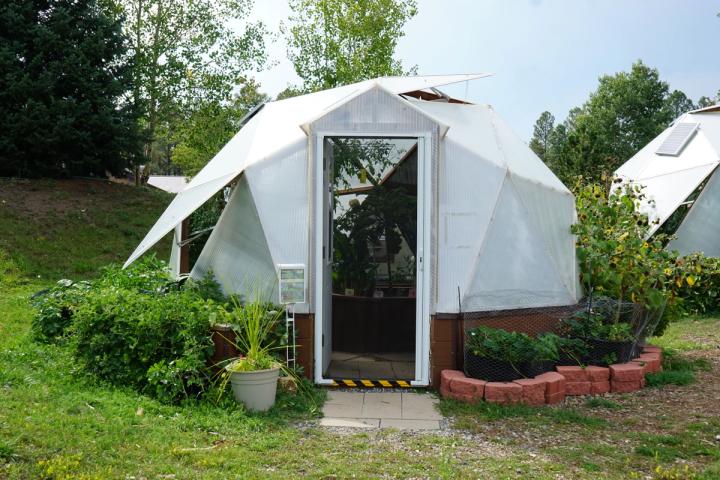
15 Foot Growing Dome
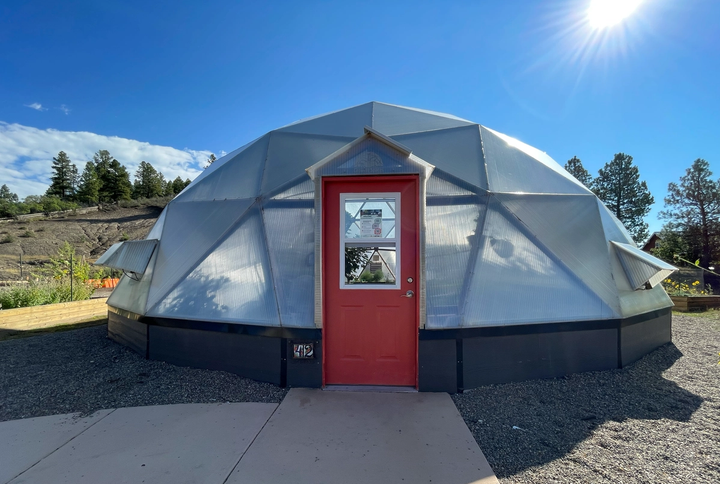
42 Foot Growing Dome
In larger Growing Domes, there is more distance between the pond, exterior glazing, airflow systems, and individual growing beds. This can make the east, south, west, north, central, and upper zones more distinct. However, the larger volume of air will make temperature swings less dramatic overall.
What Our Temperature Data Showed
To see how these microclimates behave in practice, we placed sensors in the north, south, east, west, and center zones of a 15-foot and a 42-foot Growing Dome. The sensors recorded hourly temperatures from July 17 through July 24.
The clearest pattern appeared in the unobstructed 42-foot dome. Around noon, the north zone near the pond averaged about 75.6°F, while the more exposed south zone averaged about 86.5°F. By 6:00 a.m., the north remained warmer at about 64.9°F, compared with 62.4°F in the south.
The north zone also had a much smaller average daily temperature swing, about 15.6°F compared with 28.8°F in the south. This is consistent with the temperature-moderating effect expected near thermal mass, although the reflective north wall, shade, and airflow also influence this area.
The larger dome developed more distinct microclimates overall. Around noon, the difference between its warmest and coolest zones averaged about 11.7°F, compared with 8.3°F in the 15-foot dome.
Site conditions mattered, too. The 42-foot dome has little surrounding obstruction, while a hill and large trees shade the south and west sides of the 15-foot dome. The two structures also have different ventilation layouts. These differences help explain why the smaller dome did not follow the expected directional patterns as closely.
This one-week summer study does not predict how every Growing Dome will behave, but it confirms that greenhouse microclimates are measurable and shaped by a combination of thermal mass, greenhouse size, sunlight, shade, airflow, plants, and site conditions.
Unique Growing Zones Within a Growing Dome
Every Growing Dome is different, but several common zones tend to develop based on sunlight, proximity to the pond, airflow, plant placement, greenhouse size, and orientation. Understanding these zones can help gardeners make more intentional decisions about where to place plants based on their preferred temperature, light, humidity, and airflow conditions.
The East Zone
The east side of the Growing Dome receives the earliest sunlight of the day. Because morning sun is generally less intense than afternoon sun, this area is often a few degrees cooler than the west or south zones. The east zone can be a good location for plants that benefit from direct light but are sensitive to prolonged heat. It warms earlier in the morning while often receiving some relief from the strongest afternoon sun.

The South Zone
The south zone is generally the most exposed to direct sunlight throughout the day. It is also usually the farthest growing area from the pond, which means it receives less of the pond’s temperature-moderating influence. As a result, the south zone often experiences the most extreme temperatures in the Growing Dome. It may become the hottest area during summer and one of the coolest areas during winter nights. For this reason, we recommend cold-hard crops in this area during winter. In summer, heat-loving crops do well, but may need additional shade, irrigation, or ventilation. Gardeners who grow through hot summers can find additional strategies in our guide to cooling a greenhouse.

The West Zone
The west side receives intense afternoon sunlight, often during the hottest part of the day. This can make it warmer than the east, north, or central areas of the greenhouse. The additional heat can benefit warm-season crops, but the west zone should be monitored closely during summer. Shade cloth, taller plants, consistent irrigation, and good ventilation can help protect heat-sensitive crops from excessive afternoon exposure. External shade can also significantly change this zone. A tree or nearby structure to the west may reduce afternoon heat and make the area more temperate.

The Central Zone
The central area is often one of the most temperate zones within the Growing Dome. Its proximity to the above-ground pond allows it to benefit more directly from the pond’s thermal mass. The water has a high specific heat capacity, which allows it to absorb heat when the greenhouse is warm and gradually release it as temperatures fall, helping moderate temperature fluctuations in the surrounding area.
The center of the Growing Dome is also where taller plants and trees are commonly grown. As these plants mature, their canopies can shade smaller crops growing below, creating cooler and more protected conditions at bed level.

This combination of thermal mass, plant shade, and distance from the exterior glazing often makes the central zone one of the most stable and adaptable growing areas in the greenhouse. In a larger Growing Dome, the difference between the temperate central zone and the more exposed perimeter may be especially noticeable because of the greater distance between them.
The North Zone
The north side is influenced by the reflective insulation covering the north wall, which helps reduce heat loss and redirects sunlight back toward the above ground pond. Because this zone receives less direct sunlight, it is often more protected from intense heat than the south or west zones. Its proximity to the pond may also contribute to more moderate temperatures and slightly higher humidity. The north zone can be useful for plants that prefer indirect light, cooler conditions, or protection from intense afternoon sun.

Free Download
The Upper Growing Zone
Because warm air rises, the upper portion of any greenhouse is usually warmer than the area near the soil. In a Growing Dome, the tall central space creates opportunities for vines, trellised crops, and trees, but the leaves and fruit near the top of the structure may experience much warmer temperatures than the roots and lower foliage. Upper growth may also receive stronger light and more direct airflow.
Areas Near Doors, Vents, and Fans

Doors and vents can create cooler or breezier conditions, particularly when they are open. Intake and exhaust fans help exchange greenhouse air, while the undersoil system helps circulate air through the growing beds and back into the greenhouse.
These systems help manage overall conditions, but they do not eliminate microclimates. Plants growing directly in the path of moving air may experience different temperatures, humidity levels, and soil-drying rates than plants in more sheltered areas.
In a smaller greenhouse, a fan or open door may influence most of the interior relatively quickly. In a larger structure, its effects may be strongest in the surrounding zone and less noticeable farther away.
According to UMass Amherst, horizontal airflow can help create more uniform greenhouse temperatures while reducing moisture around plant foliage. Good air movement can reduce some differences between greenhouse zones, but it rarely eliminates them completely. Learn more about why greenhouses need ventilation and how ventilation supports temperature control, humidity management, and plant health.
These Zones Are General Guidelines
The zones within a Growing Dome are useful generalizations, but they are not fixed. Conditions can vary based on regional climate, elevation, greenhouse size, greenhouse orientation, seasonal sun angles, nearby terrain, and the placement of surrounding vegetation or structures.

Trees, fences, houses, sheds, and other buildings can cast shade at different times of day and significantly change how each zone behaves. A west zone that would normally receive intense afternoon sun may remain cooler if it is shaded by a nearby tree or structure. An east zone may warm more slowly if morning sunlight is blocked.
Even two Growing Domes of the same size can develop different microclimates because no two properties have exactly the same sun exposure, wind patterns, vegetation, or surroundings. Careful greenhouse site selection can help you evaluate sunlight, shade, wind protection, drainage, and access before choosing a location.
Using Deciduous Trees for Seasonal Shade
Deciduous trees planted to the south or west of a greenhouse can be especially beneficial when they are carefully placed. During summer, their leaves provide shade during the hottest parts of the day, helping reduce solar heat gain and protect plants from intense afternoon exposure. During winter, deciduous trees lose their leaves and allow more sunlight to reach the greenhouse when solar gain is most valuable.
The same principle can apply inside the Growing Dome. Deciduous fruit trees and other tall plants can shade lower-growing crops during the summer, then allow more light to reach the beds after their leaves drop.

Trees should still be placed thoughtfully. Gardeners should consider the mature height and width of the canopy, root growth, falling branches, prevailing winds, and the amount of winter shade created by the trunk and branches.
Microclimates Change With the Garden
Growing zones are not static. They change throughout the year as the angle of the sun shifts, outdoor temperatures rise and fall, vents and fans are used differently, and plants grow larger.
A sunny bed in early spring may become shaded by a mature tree or climbing vine later in the season. A cool winter zone may become significantly warmer during summer. Irrigation, plant density, and airflow can also change the temperature and humidity within each area.
Pruning a tree, removing a large plant, opening a vent, or adjusting irrigation may alter the conditions in a zone almost immediately. The greenhouse and the garden are constantly influencing one another.
How to Identify Microclimates in Your Greenhouse
The best way to understand a greenhouse’s microclimates is through observation. Watch how sunlight moves through the structure during the morning, afternoon, and evening. Notice where condensation develops, where soil dries quickly, where snow melts first, and where plants appear stressed or especially vigorous.
Small temperature and humidity sensors can also be placed in different zones to compare conditions. For more useful readings, sensors should be positioned at plant level rather than only near the floor or roof.
In a larger greenhouse, it may be helpful to place sensors in several locations, including the center, perimeter, upper growing area, and near doors or ventilation systems. In a smaller greenhouse, fewer sensors may be needed, but readings can change quickly, so tracking daily highs and lows can be especially helpful.
It can also help to monitor:
- Soil moisture
- Sun exposure
- Seasonal shade patterns
- Plant performance
- Areas with limited airflow
These observations do not need to be complicated. Even a simple notebook can reveal patterns over time. For more site-specific planning, the Growing Dome Greenhouse Climate Calculator uses location, dome size, and growing goals to provide climate-control recommendations.
Using Microclimates to Your Advantage
The goal is not necessarily to make every part of the greenhouse identical. A uniform environment may be helpful for commercial production of a single crop, but many home greenhouse gardeners grow plants with very different needs. One plant may prefer bright light and dry air. Another may perform better with afternoon shade, moderate temperatures, and greater humidity. By recognizing the microclimates within the greenhouse, gardeners can match plants with the locations most likely to support them. If a crop consistently struggles, the solution may not be more fertilizer or more water. It may simply be growing in the wrong zone.
The Growing Dome’s design does not eliminate differences in temperature, humidity, light, or airflow. Instead, it gives gardeners several interconnected growing zones to work with.
Learning how greenhouse size, seasonal sunlight, thermal mass, airflow, plant growth, and site conditions influence those zones can help you choose better locations for each plant, identify problems earlier, and make more intentional use of the entire greenhouse.
Ready to grow in a greenhouse designed for year-round possibilities?

Seasonal Growing Tips & Greenhouse Advice
Monthly stories from our greenhouses, Growing Dome spotlights, and other gardening content


Share This

I graduated from Fort Lewis College in 2018 with a BA in Environmental Studies. I began working for Growing Spaces in August of 2020 and have had the pleasure of working in many departments. I enjoy being a part of this amazing team that helps others achieve their dream gardens! In my spare time, I enjoy working in the 15’ Growing Dome that my husband and I share.
View full bioDownloads
Featured Categories
Seasonal Growing Tips & Greenhouse Advice
Monthly stories from our greenhouses, Growing Dome spotlights, and other gardening content
Featured Content


How the Growzebo™ Came to Life


Dome Greenhouse Planting Guide


Fall Planting in the Growing Dome
Featured Products


Sign up for The Happy Grower Newsletter
Once a month: stories from our gardens, Growing Dome spotlights, and what's in season in Pagosa Springs.