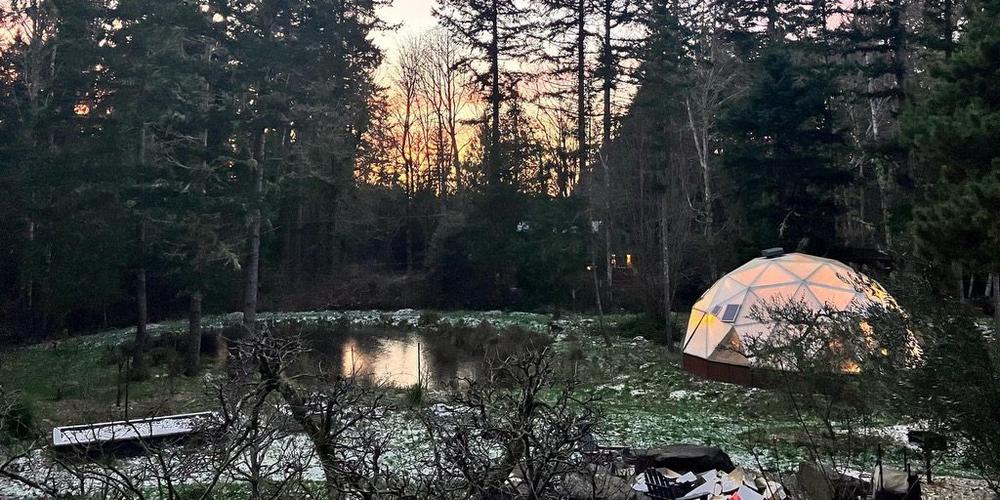
Your First Winter in a Greenhouse: What to Expect and When to Troubleshoot

The first winter with a greenhouse can be a little nerve racking. You watch the forecast more closely than you ever have before, check the thermometer before bed, then check it again first thing in the morning. When the temperature inside drops lower than you expected, it is easy to wonder, Is this normal? Am I doing something wrong? Usually, the first winter is when you really begin to understand your greenhouse.
We have been building and gardening in Growing Dome greenhouses from our facility in Pagosa Springs, Colorado, since 1993. Our demonstration Domes operate year round in the southern Colorado Rocky Mountains, so we have had plenty of cold, sunny, snowy, cloudy, and downright unpredictable winter weather to learn from.
One of the biggest things we have learned is that winter greenhouse growing is not about chasing one perfect number on the thermometer. It is about understanding how sunlight, temperature, moisture, thermal mass, ventilation, weather, and your plants all work together. If this is your first winter in a Growing Dome, here is what to expect, what is usually normal, and what to check when something does not seem quite right.
Your Greenhouse Does Not Need to Feel Like Summer
One of the biggest adjustments for new greenhouse owners is realizing that winter growing does not have to mean recreating July. The temperature you need depends on what you want to grow. Cold tolerant crops such as kale, spinach, lettuce, chard, carrots, radishes, and other cool season vegetables are much better suited to winter conditions than tomatoes, peppers, cucumbers, and tropical plants.
There is a big difference between harvesting hardy greens through winter and trying to keep tomatoes actively producing in January. Don’t get me wrong, if fresh tomatoes in January are your goal, you can absolutely work toward that with a little extra planning, heat, and light. That is just not what we are focusing on here.

The last tomato harvest in late November, December 1st = Tomato Down Day
The passive systems in a Growing Dome are designed to help moderate conditions, not hold the greenhouse at one fixed temperature. The pond, glazing, north wall insulation, ventilation, and solar gain all work together, but your growing goals still determine whether the conditions inside are right for your plants. Before deciding that your Dome is too cold, ask yourself a simpler question: Too cold for what?
If a plant is struggling, start by looking at what that particular crop needs and compare that with the conditions where it is actually growing. You may find that the greenhouse is doing exactly what it should, but the plant is not a good match for your winter conditions without some extra support. If you are still deciding what to grow, our Winter Greenhouse Gardening guide is a good place to start.
Expect Temperatures to Change
A greenhouse is not a perfectly controlled indoor room. On a sunny winter day, solar energy can warm the air and materials inside the greenhouse. Once the sun goes down, heat begins moving back out.
In a Growing Dome, the above ground pond is an important part of that cycle. The dark pond wall absorbs solar energy and transfers heat into the water. The water stores some of that energy and releases it as conditions cool, helping moderate temperature swings.
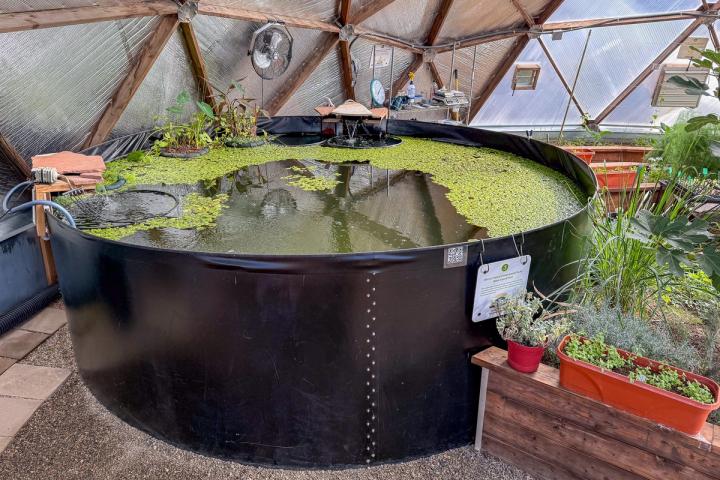
The pond does not hold the Dome at one constant temperature. Instead of focusing on one thermometer reading, start watching the pattern. How warm does the Dome get on a sunny afternoon? How quickly does it cool after sunset? What happens after several cloudy days? Those patterns will tell you much more about your Dome than one cold morning.
If you are curious about how your greenhouse is really behaving, keep a simple temperature log for a week. Note the outdoor low, the lowest temperature inside the Dome, and whether the day was sunny or cloudy. It does not need to be fancy. A few days of notes can tell you a lot.
Pay Attention to the Sun, Not Just the Forecast

When greenhouse owners worry about winter temperatures, they naturally focus on the overnight low. In a Growing Dome, sunlight is just as important because solar energy helps warm the greenhouse and charge the thermal mass during the day. Several cloudy days can therefore have a bigger impact than you might expect. The same is true when snow or seasonal shade reduces the amount of sunlight entering the Dome.
After a snowstorm, take a look at the south facing side. The rounded shape helps snow shed from the Dome, but if snow is still blocking a significant amount of glazing, you may be losing valuable winter sun. Snow that has already moved off the Dome can actually be helpful. Snow contains trapped air that slows heat transfer, making it a natural insulator. We often allow snow to accumulate around the foundation and along the north side of our Domes. On the south side, keep it below the top of the foundation wall so it does not block sunlight.
Slower Growth Is Normal
Temperature is only part of winter growing. Winter also brings shorter days and fewer hours of sunlight, which means many plants naturally grow more slowly. This can surprise new Growing Dome owners because the plants are protected inside a greenhouse, but they are still responding to the season.
This is one reason planting ahead is so important. Whenever possible, we want our winter crops established before we reach the darkest part of the year. We like to start our winter crops in mid-September because once winter settles in, many cool season crops spend more time maintaining and slowly producing than putting on rapid new growth.

If your plants look healthy but seem to be taking their sweet time, do not automatically reach for fertilizer or turn up the heat. They may simply be behaving like winter plants. For a deeper look at this, see Why Greenhouse Plants Grow More Slowly in Winter.
Condensation Is Not Automatically a Problem
Your first stretch of cold weather may bring another surprise: condensation. Warm, humid greenhouse air meeting a colder surface can create condensation, and plants, damp soil, watering, and the pond all contribute moisture to the air. At the same time, we naturally want to close the Dome up more tightly when it gets cold. That means humidity can build up more easily during winter.

If humidity becomes excessive, start with the biggest moisture sources. Check the soil before watering instead of relying on your summer schedule. Winter plants generally use water more slowly, and consistently wet beds can add unnecessary moisture to the Dome.
The pond is another source of evaporation. Covering part or all of the water surface can help reduce that moisture while still allowing the pond to function as thermal mass. The dark pond wall absorbs solar energy and transfers the heat into the water, where it can be stored and released as the Dome cools.
Air movement matters too. The Growing Dome undersoil system circulates air from the pond area through pipes beneath the perimeter beds. We have observed fewer mold and fungus issues when using the system, particularly when winter humidity and condensation are concerns.
Some condensation is part of greenhouse life. What you want to avoid is a Dome that stays excessively wet with very little air movement for long periods.
What If Something Does Not Seem Right?
At some point during your first winter, something will probably make you stop and wonder what is going on. The Dome may suddenly seem colder, condensation may be heavier than usual, or one group of plants may look unhappy while everything else seems fine. Before changing everything at once, look for what changed.
If Your Dome Is Colder Than Expected
Start with the parts of the Growing Dome that help you collect and hold heat.
Check your winter vent and fan setup. Make sure vents that are disengaged are closed and secured, while fan openings are insulated as appropriate for your setup. Look around the door frame, vents, and other openings for obvious gaps. Temporary winter insulation can shift, so something that was snug in November may need attention later in the season.
Next, check the pond. Make sure the water level is where it should be and that tall plants are not heavily shading the dark pond wall. If the pond is going to help store solar energy during the day, sunlight needs to reach it. We aim for 2-4” below the crossbar in oval ponds and 4-6” below the upper edge of pond metal in round ponds.
Then look outside. Has it been cloudy for several days? Is snow blocking the south facing glazing? Has the lower winter sun created shade from a tree, building, fence, or other obstruction?
If those pieces look right and the Dome is still consistently falling below the temperature your plants need, then it may be time to consider supplemental heat instead of continuing to chase small adjustments.
If Your Dome Is Too Humid
Start with watering. Check the soil before adding more water and look for beds or pathways that are staying wet for long periods.
If the pond is contributing more evaporation than you want, covering part or all of the water surface can help. Also make sure your undersoil circulation system is operating as intended and that plants are not packed so tightly together that air cannot move through them.
On relatively warm, sunny winter days, a short period of ventilation can help release excess moisture. Give the Dome enough time to close back up and collect warmth before temperatures begin falling toward evening.
If you use supplemental heat and suddenly notice more humidity, look at the heater too. Combustion-based heaters such as propane produce water vapor along with heat, so they can add moisture to the greenhouse.
If Your Plants Are Struggling but the Temperature Looks Fine
Look at where the plants are growing before changing the climate of the entire Dome. Are leaves touching the polycarbonate? Plants directly against the glazing can experience colder conditions than plants farther inside. Are all of the struggling plants in the same bed or part of the Dome? Is one area staying wetter than another?

A Growing Dome has different microclimates. Sometimes the best solution is moving a sensitive plant or changing what you grow in a particular spot rather than heating the entire greenhouse.
Also remove dead or damaged plant material, especially leaves that are wet or resting against the polycarbonate. Keeping the garden tidy becomes even more important during the cooler, more humid months to prevent pest and disease outbreaks.
After a Heavy Snow
You usually do not need to remove every bit of snow from around a Growing Dome. Instead, check the places where snow can interfere with how the Dome works. Make sure enough snow has moved off the south facing glazing to allow sunlight in. Keep doors and fan openings accessible.
If your upper vents remain engaged for winter airflow, make sure snow has sloughed away from the vent area before temperatures rise enough for the opener to activate. You want the vent to be able to move freely without accumulated snow getting in the way.
Snow around the foundation and north side can stay and provide some extra insulation as long as it is not interfering with a door, vent, fan, or other moving component.
Think of your post-storm check as less about clearing the Dome and more about making sure sunlight and moving parts can still do their jobs.

Snow built up around foundation wall and north side of Growing Dome with doorway and south side cleared
If You Still Cannot Figure It Out
Take a few days of notes before making a major change. Record the outdoor low, the lowest temperature inside the Dome, whether the day was sunny or cloudy, and anything unusual you noticed with snow, ventilation, watering, or humidity. Patterns are much easier to see when you have more than one cold night to compare.
That information is also extremely helpful if you reach out to our team. Knowing what the weather has been doing, where you are measuring temperature, what you are growing, and what you have already checked gives us a much better starting point than one thermometer reading.
When Does Supplemental Heat Make Sense?
Sometimes supplemental heat really is the right answer, but start with the plant, not the heater. Ask what you are trying to accomplish. Do you want to keep a plant alive through winter, keep it actively growing, or encourage it to produce fruit? Those goals can require very different conditions.
Then look back at what your Dome has been doing. If it only falls below your target during a handful of extreme nights, you may need a different solution than someone whose greenhouse stays below the desired range for weeks.
Before adding heat, make sure you have already checked solar exposure, thermal mass, unwanted airflow, winter ventilation settings, and thermometer placement. Once those pieces are working as intended, you can make a much better decision about whether supplemental heat is actually necessary.
Our Greenhouse Heating and Cooling Equipment Calculator can help you evaluate your climate, Dome size, and temperature goals together.
Your First Winter Is a Learning Season
So, what should you expect from your first winter growing season? More than anything, expect to learn a lot. I’ll let you in on a little secret. I have worked here for six years, I have my own Growing Dome, and I have spent plenty of time visiting with other owners and seeing their Domes in action. Mother Nature still refuses to let me “know” much of anything for certain. What works for me might not work for you.
No two Domes are exactly the same, no two winters are the same, and no two gardens are the same. The more experience you gain, the better you get at reading the signs, making adjustments, and trusting yourself and your greenhouse when things do not go exactly as planned.

Take this advice for what it is: a starting point based on what we have learned over the years. Pay attention to your Dome, learn what works for you, and if you discover something worth sharing, tell us in the comments or in our Facebook group. Some of the best lessons come from Growing Dome owners learning right alongside each other.

Seasonal Growing Tips & Greenhouse Advice
Monthly stories from our greenhouses, Growing Dome spotlights, and other gardening content


Share This

I graduated from Fort Lewis College in 2018 with a BA in Environmental Studies. I began working for Growing Spaces in August of 2020 and have had the pleasure of working in many departments. I enjoy being a part of this amazing team that helps others achieve their dream gardens! In my spare time, I enjoy working in the 15’ Growing Dome that my husband and I share.
View full bioDownloads
Featured Categories
Seasonal Growing Tips & Greenhouse Advice
Monthly stories from our greenhouses, Growing Dome spotlights, and other gardening content
Featured Content


How the Growzebo™ Came to Life


Featured Products


Sign up for The Happy Grower Newsletter
Once a month: stories from our gardens, Growing Dome spotlights, and what's in season in Pagosa Springs.