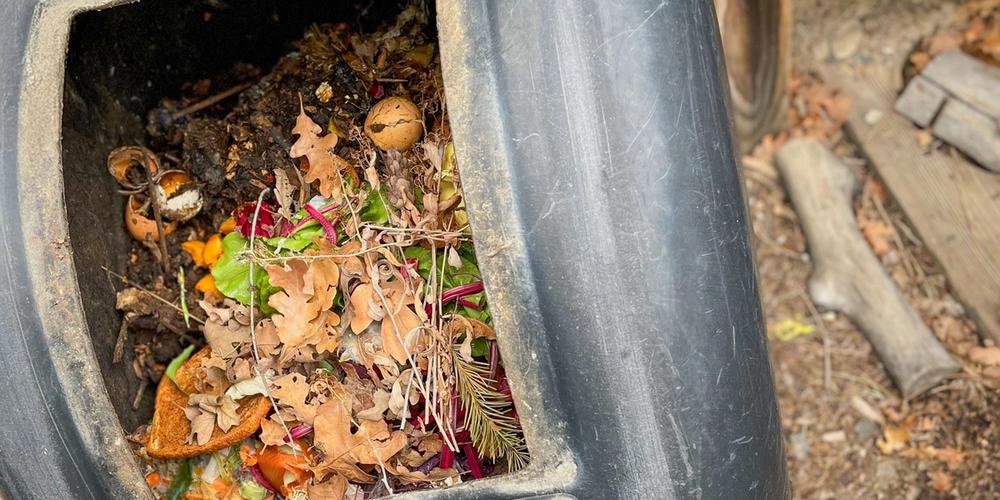
Adding Composted Leaves to the Soil

So Richard Miller, our resident Master Gardener here at Growing Spaces, and I finally made it to my Growing Dome for a little gardening evaluation. Turns out that my concerns about my gardening skills have a lot less to do with the results this year in my Dome, than the soil or rather in this case “the dirt”. My soil, like what most people are able to purchase, is local dirt, which fills the planting beds, but after it’s first year was a little (ok a lot) low on organic materials. Note to self: if you have to use two hands to dig with a trowel in your soil, it’s probably more dirt than soil. So what’s the difference you ask? Dirt is the stuff that is everywhere, makes great mud pies around here, because of our clay content, but really has little organic material to it. When I say organic, I’m not talking about certified organic stuff, I’m talking about organic material, like dead plants, leaves, and some natural bacteria that breaks down those things into a soft lovely loose mulch situation. Richard suggested that I do my best to add some organic material to the planting beds, however I can, as buying lots of bags of top soil or compost is just as challenging financially for me as it is for many people. But after looking around the property he came up with a great solution, I shoveled up the soft fluffy, well decomposed forest duff under the gamble oak (also commonly called scrub oak) trees around our property. It was full of composted leaves, and general forest debris that could only help the hard compacted soil that is in my planting beds, and with the gift of 5 bags of top soil from a friend, the Dome has a whole new lease on life as far as the soil goes. I am hoping to get a load of well aged horse manure soon to add to this new soil bounty and totally anticipate that all of my existing plants will really start to not only grow but THRIVE. It really is all about the soil. The squash in the dome is now over 12′ long and has some baby squash on it. I’m loving it, but it does kind of frighten small children when they see it. Loving this time of year in the Domes!

Seasonal Growing Tips & Greenhouse Advice
Monthly stories from our greenhouses, Growing Dome spotlights, and other gardening content


Share This

This byline marks posts written collectively by Growing Spaces staff where no single contributor is the primary author. Growing Spaces has designed and built geodesic Growing Dome greenhouses from Pagosa Springs, Colorado since 1989, with more than 2,000 installations across 50 states and 14 countries. Posts under this byline draw on shared expertise from the team: gardeners working the production trial domes, design and engineering staff, installation crews working on customer sites, and customer experience staff who walk owners through configuration and long-term operation. When a post belongs under one person's name, it carries that person's byline instead.
View full bioDownloads
Featured Categories
Seasonal Growing Tips & Greenhouse Advice
Monthly stories from our greenhouses, Growing Dome spotlights, and other gardening content
Featured Stories


How to Test and Amend Your Garden Soil


Hydrophobic Soil and How to Fix It
Featured Products


Sign up for The Happy Grower Newsletter
Once a month: stories from our gardens, Growing Dome spotlights, and what's in season in Pagosa Springs.