




Why Greenhouses Need Ventilation: Fans, Vents, Airflow & Plant Health

Revised 5/14/2026
Do Greenhouses Need Ventilation?
Yes, greenhouses need ventilation. Proper airflow helps regulate temperature and humidity, brings in fresh air to support plant growth, reduces the risk of fungal disease, and strengthens plants by gently moving their leaves and stems. Some greenhouses can rely on passive vents and doors, while larger greenhouses or sites sheltered from the wind may need fans for more consistent air circulation.
In a Growing Dome, ventilation is built into the design based on the size of the greenhouse. Smaller domes use lower intake vents, upper exhaust vents, and circulation fans, while larger domes use intake and exhaust fans for active air exchange. Every Growing Dome also includes an undersoil fan system that moves air beneath the raised garden beds as part of the dome’s growing environment.
What you’ll learn:
- Why greenhouses need ventilation year-round
- How airflow helps prevent heat stress, humidity problems, and fungal disease
- The difference between passive and active ventilation
- How Growing Dome ventilation works
What Happens If a Greenhouse Has Poor Ventilation?
There are several consequences of poor ventilation inside a greenhouse, including increased susceptibility to powdery mildew, fungal problems, and even mold. Not only can this create unpleasant, musty odors in your greenhouse, but it can also cause plant health issues that are difficult to correct once they take hold. Spores can spread through your garden and settle into the soil, plants, wooden struts, raised garden beds, and other natural materials inside the greenhouse. Prevention is key and can be achieved with simple ventilation that helps cool the temperature and release trapped humidity.
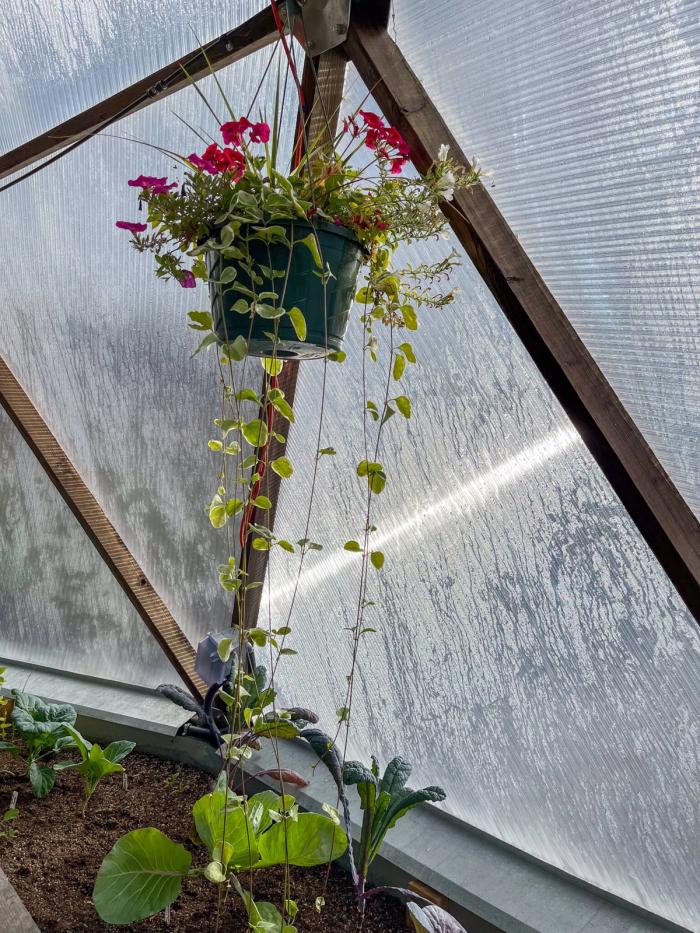
Another result of poor ventilation is trapped moisture. This is most often seen in the greenhouse in winter, when condensation collects on the glazing material. High humidity levels can cause foliage and soil to become excessively wet, which allows diseases to spread. Mold can also be a food source for some insects, so the increase in moisture can attract more pests.
Stagnant or trapped air warms quickly, especially during warmer, longer summer days, accelerating the rise in temperature. While most plants can tolerate temperatures much higher than we may be comfortable with, extended exposure to heat can cause the soil to dry out quickly. Your plants may wilt or even scorch, and they may experience stunted growth. Photosynthesis, the process by which plants produce their own food, often slows significantly in extreme heat and may stop around 105ºF depending on the plant. Most flowering plants prefer nighttime temperatures between 55–60ºF. Ventilating greenhouses works to move cooler air from outdoors through the greenhouse while releasing hot, humid air before it builds up.
The good news is that most ventilation problems can be prevented by understanding how air moves through a greenhouse.
How Greenhouse Ventilation Works
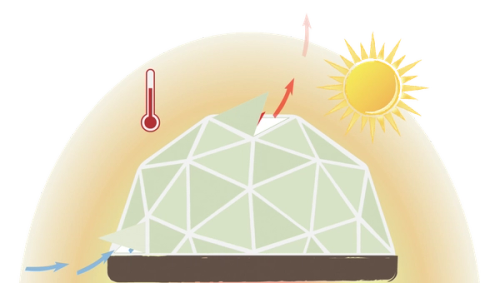
When we talk about greenhouse ventilation, there are three main types of air movement to consider: passive ventilation, active ventilation, and circulation.
Passive ventilation works through natural convection. Hot air rises and escapes through upper vents, while lower vents draw in cooler outside air. This creates what is often called the “chimney effect,” helping cool the greenhouse without electricity. Wind and air pressure can also help move fresh air in and hot air out.

Active ventilation uses intake and exhaust fans to mechanically move air through the greenhouse. Intake fans bring fresh air in, while exhaust fans push hot, humid air out. This can be especially helpful in larger greenhouses, sites with less natural wind, or during hot weather when passive airflow alone may not be enough.
Circulation fans are also mechanical, but they serve a different purpose. Instead of moving air in and out of the greenhouse, they move air within and across the growing space. This helps prevent pockets of heat and humidity from building up around plants.
Planning a greenhouse and wondering what kind of ventilation you’ll need? Learn how our automatic greenhouse vents and fan options work in a Growing Dome.

Passive vs. Active Greenhouse Ventilation: What Creates the Airflow?
Passive Ventilation Options
There are many different tools available to ventilate a greenhouse, and some depend on the type of greenhouse that you have. For passive ventilation, vents can be installed at the top for optimal heat exchange, since hot air naturally rises. Side vents or windows allow cooler air at ground level to enter the greenhouse.
Ridge vents are installed along the ridge of the roof. These can be as simple as a fixed opening or corrugated roofing piece that always allows some airflow. If the vent is not fixed, it may need to be opened manually or operated automatically with heat-sensitive openers, cranks, or propping supports.
Doors can also be used as a temporary, passive ventilation method when propped open during the heat of the day. In a hoop house, another option is to roll up or raise the sides of greenhouse film to increase airflow.
Active Ventilation Options
Active ventilation is useful when natural air flow isn’t consistent enough, especially in hot or humid climates, larger greenhouses, low-wind sites, or structures with dense planting. Electric fans, whether solar or grid-tied, can give gardeners extra control over air movement.

Intake and exhaust fans force air through the greenhouse and can be controlled manually, thermostatically, or with timers. For example, fans may be set to run during the heat of the day, continue long enough into the evening to help cool the greenhouse, and then shut off so the structure can hold cooler air until temperatures begin to rise again.
Motorized louvers or shutters can also be used with active ventilation systems. The opening itself allows air to pass through, but the motorized control gives the gardener more precise timing and helps the fan system work efficiently.
In most greenhouses, the best ventilation setup is not strictly passive or active. It is usually a combination of openings that let air exchange naturally and fans or controls that step in when conditions require more airflow.
Do You Need a Fan in a Greenhouse?
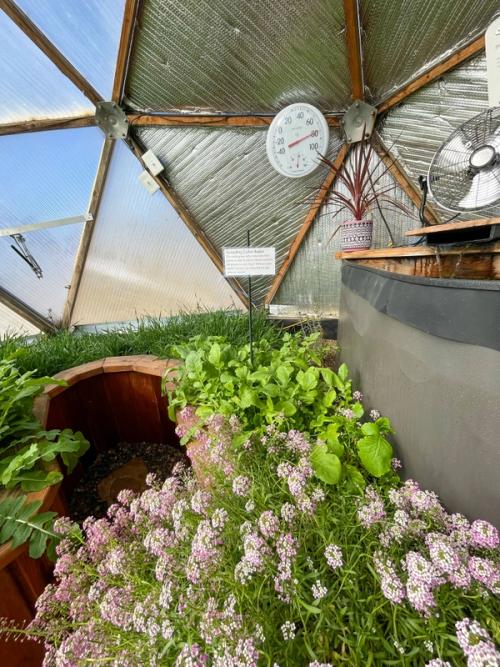
We highly recommend at least one fan in most greenhouses. At a minimum, that should be a circulation fan. Circulation fans are often called Horizontal Air Flow fans, or HAF fans, because they help keep air moving evenly across the greenhouse. They are useful when plants are dense, humidity is high, or certain areas of the environment tend to become stagnant.
It is also helpful to have another fan that can actively move air into or out of the greenhouse on days when wind alone is not enough to push or pull air through your vents.
The right setup depends on the size and design of the greenhouse, the climate you live in, and the plants you are trying to support. Larger structures typically have a higher volume of air to move and may require more active ventilation. A smaller greenhouse designed with passive principles in mind, in a relatively dry climate with mild summer temperatures, may require no additional ventilation beyond well-placed vents and a circulation fan.
How Much Ventilation Does a Greenhouse Need?
A common rule of thumb is to exchange the greenhouse’s full air volume every 1 to 3 minutes. To estimate this, calculate the greenhouse volume in cubic feet and divide it by your fans’ total CFM. For example, a 15-foot Growing Dome has about 520 cubic feet of air. A fan rated at 1,217 CFM could theoretically exchange that air about once every 26 seconds under ideal conditions. In practice, actual airflow will vary based on vent openings, fan placement, wind, and resistance through the structure.
That number is only a starting point. Ventilation needs could vary depending on the geometry of your greenhouse, such as a geodesic dome vs. a traditional greenhouse. Your outside climate also influences how much heat and air exchange you need. A greenhouse in a hot, dry climate will have different ventilation needs than one in a cool, humid climate.
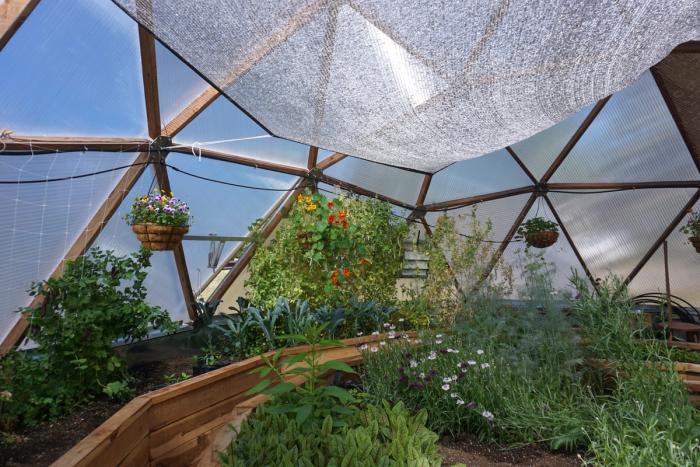
Shading is another factor. Placing a greenhouse where it receives natural summer shade from deciduous trees, or adding shade cloth during the hottest months, can reduce the amount of heat that needs to be vented. Wind exposure also matters. A windy site may help move air through vents, or it may work against your ventilation strategy depending on the direction, vent placement, and surrounding structures.
And, of course, your plants’ needs should guide your ventilation choices. Dense plantings, heat-sensitive crops, overwintering plants, and seedlings may all require different levels of airflow and humidity control.
Indoor Greenhouse Gardens Still Need Airflow
Some gardeners use the phrase “indoor greenhouse garden” to describe a small indoor growing setup, such as a grow cabinet, seed-starting shelf, sunroom garden, or DIY indoor grow chamber. These spaces are different from outdoor greenhouses, but they still need airflow. In enclosed spaces, stagnant air can trap humidity, encourage fungal disease, and make it harder for plants to transpire properly. Simple circulation from small fans can help keep air moving around plants, while some indoor growing spaces may need exhaust ventilation as well.
Greenhouse Ventilation by Season
Now that you understand how air moves through a greenhouse and why it’s important, the next step is adjusting ventilation for the season.
Summer Ventilation
Summer is typically when most gardeners begin to think about ventilation. Summer ventilation is all about releasing built-up heat before it stresses your plants. In addition to opening vents and using fans, shade cloth, thermal mass, and smart watering habits can all help regulate temperature. For a deeper look at summer heat management, read our guide on how to cool a greenhouse.
Fall Ventilation
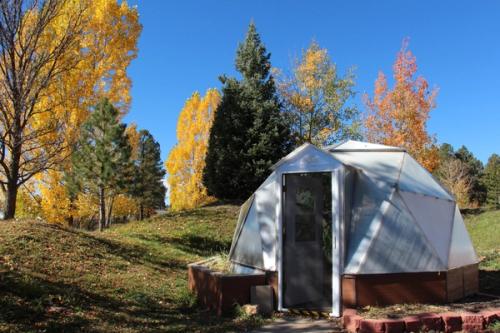
The transition in the fall is a little more subtle. Temperatures may still rise during the day, but cooler nights don’t necessarily mean you want to vent all your heat during the day. It can be a trickier time to manually regulate ventilation, as temperatures may vary widely from day to day.
If you have larger vining summer plants growing, such as cucumbers or beans, consider leaving them in place as long as you can to provide additional shade. You can also plant cool-weather crops beneath them to get a jump on the winter season through vertical gardening.
Winter Ventilation
In winter, your instinct may be to trap as much heat as possible. But when air is trapped inside the greenhouse, humidity can build up quickly because moisture has nowhere to escape. That is why managing humidity in a greenhouse becomes especially important during winter. Your heat source can also play a role. Unvented propane heaters add moisture to the air as they burn, while electric heaters provide dry heat and can make humidity easier to manage.
In colder climates, we do recommend disengaging automatic vents to help trap heat and avoid freezing your plants. However, periodic manual ventilation becomes more important. Opening a door or engaging a vent for a few hours during the warmer part of the day can help release excess humidity and improve conditions inside the greenhouse.
Spring Ventilation
Spring ventilation is much like fall, when temperatures are less predictable. You’ll want to continue your winter-style management while paying close attention to sunny days. Vent hot air during the day when needed, but be prepared to trap some of that warmth to protect your plants overnight.
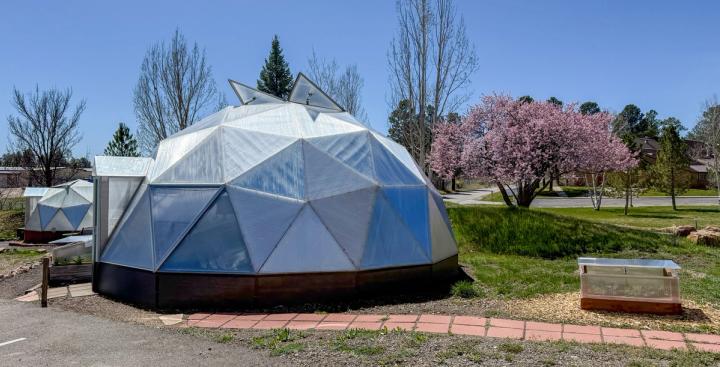
You may use your greenhouse as a season extender during the shoulder seasons, growing more in winter in a warmer climate or more in summer in a cooler climate. With a Growing Dome, you have more opportunity for year-round gardening.
That seasonal flexibility is one of the reasons ventilation design matters. In a Growing Dome, passive vents, automatic openers, and fan options work together to help gardeners manage airflow through changing conditions.
How Growing Dome Ventilation Works
Our smaller Growing Domes, including the 15-foot, 18-foot, 22-foot, and 26-foot models, primarily use passive ventilation to draw cooler air in through the lower vents and exhaust warm air through the upper vents. The number of vents varies by dome size, and all include automatic vent openers that respond to temperature using wax-filled pistons.
These smaller dome kits also come standard with a 12V Hybrid Fan that can run on solar power, with the option to use grid power as a backup or as the primary power source. This fan is primarily included as a circulation fan. Additional vents and attic fans are also available for certain sizes if your climate or site conditions require more ventilation.
On the larger domes, 33-foot and 42-foot models, the size of the polycarbonate panels is not conducive to traditional vent openers, and stronger winds can increase the risk of damage to larger vented panels. In this case, we use active ventilation in the form of intake and attic fans to exchange air. These kits are electrically powered by default, but can be upgraded to solar options.
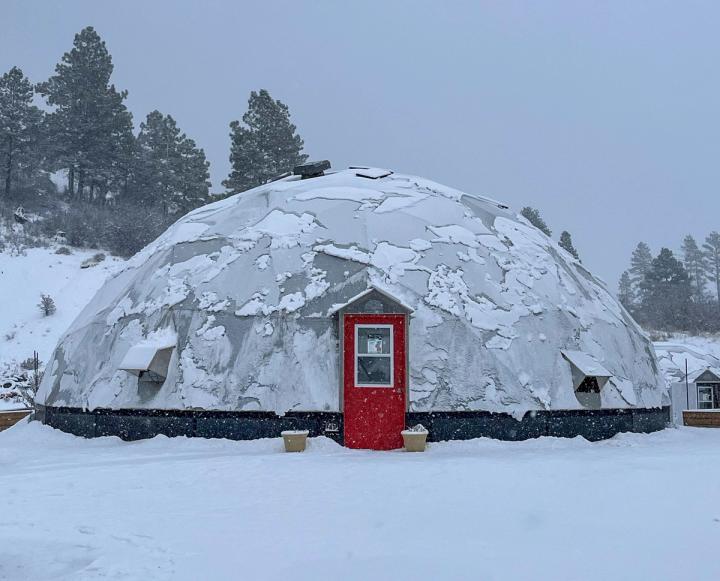
All of the dome kits come with a ½-lite vented door. The top half of this door has a screened window that opens, so you can bring more cool air into the dome while maintaining the security of a closed door to help keep critters out.
Every Growing Dome also includes an undersoil system, one of the seven features unique to our greenhouse design. This system functions as a type of horizontal airflow system below the garden beds. Instead of moving air across the tops of plants, it circulates air beneath the soil to help move heat and moisture through the dome.
Want help choosing the right ventilation setup?
A well-ventilated greenhouse is easier to manage, healthier for plants, and more adaptable through changing seasons. If you’re comparing greenhouse options or wondering what ventilation setup is right for your climate, our team can help.
FAQ
Do greenhouses need ventilation?
Yes, greenhouses need ventilation year-round. Proper airflow helps regulate temperature and humidity, brings in fresh air for plant growth, and reduces the risk of fungal disease. Without ventilation, heat and moisture can build up quickly.
Do I need a fan in my greenhouse?
Most greenhouses benefit from at least one circulation fan, especially when plants are densely grown or humidity is high. Larger greenhouses, hot climates, or sites sheltered from wind may also need intake or exhaust fans for active ventilation. See the section above on whether you need a fan in a greenhouse.
What is the best airflow for a greenhouse?
The best airflow for a greenhouse is steady, gentle, and consistent. You want enough fresh air exchange to release heat and humidity, along with enough internal circulation to prevent stagnant pockets around plants. In many greenhouses, that means using passive vents or doors for air exchange, fans when natural airflow is not enough, and circulation fans to keep air moving evenly across the growing space.
For fan sizing, see the section above on how much ventilation a greenhouse needs.
Should greenhouse fans run all the time?
It depends on the type and purpose of the fan. Circulation fans can run continuously or on a timer to maintain steady air movement and prevent stagnant pockets of heat and humidity. Intake and exhaust fans usually run as needed based on the temperature and humidity inside the greenhouse, helping vent hot or humid air when conditions require it.
Is passive ventilation enough for a greenhouse?
Passive ventilation may be enough for smaller greenhouses in mild climates, especially when the structure has well-placed upper and lower vents. Active ventilation is useful when natural airflow isn’t consistent enough, especially in larger greenhouses, hot or humid climates, low-wind sites, or dense plantings.

How do automatic greenhouse vents work?
Automatic greenhouse vents open and close without manual adjustment. Some systems use electrical sensors, timers, or motors, along with hinges that allow the vent to open and close. Growing Spaces greenhouses use a non-electric option with heat-sensitive wax cylinders. As the greenhouse heats up, the wax expands and pushes a piston that opens the vent. As temperatures cool, the wax contracts and a spring closes the vent again.
Can a greenhouse have too much ventilation?
Yes, a greenhouse can have too much ventilation, especially if you are venting heat or humidity faster than your plants need. Seasonal changes require adjusting ventilation depending on whether you are trying to release heat, hold warmth, or manage humidity. Too much ventilation in hot, dry, or windy conditions can dry out soil and stress plants, while too much ventilation in winter can release valuable heat. Intake and exhaust should also be balanced so fans can move air efficiently without creating pressure issues.
How do I ventilate a greenhouse in winter?
In winter, ventilate during the warmer part of the day by opening a door or temporarily engaging a vent for a few hours. This helps release excess humidity without losing too much stored heat. In colder climates, you may want to disengage automatic vents and rely on periodic manual ventilation instead. See more about seasonal greenhouse ventilation above.
Where should fans be placed in a greenhouse?
Fan placement depends on the type of fan, greenhouse design, and local wind patterns. In many traditional greenhouses, intake fans are placed lower on a wall, while exhaust fans are placed higher or across the space to pull warm air out. Triangulating airflow, or creating air movement from more than one direction, can help maximize the benefit of intake fans. Avoid placing intake fans directly into strong prevailing winds, as high winds can overpower fans, disrupt airflow, or force shutters open.
Circulation fans should move air throughout the greenhouse and across the plants rather than pull air in or push it out. This helps prevent stagnant pockets of heat and humidity while mimicking a gentle breeze that can strengthen plant stems. In a Growing Dome, circulation fans may be positioned to move air across the above-ground pond. During summer, this can help distribute cooler, humid air from the north side through the growing space. In winter, this positioning can help circulate warmer air from around the thermal mass of the pond throughout the greenhouse.
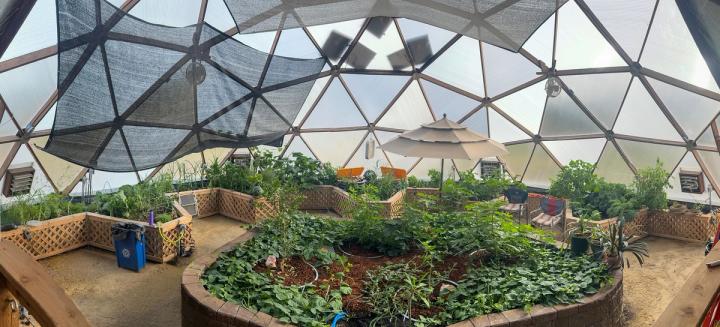
Fan placement varies by dome size, site, and climate, so contact us if you’re adding or upgrading ventilation in your Growing Dome.
What is the difference between circulation fans and exhaust fans?
Circulation fans move air within the greenhouse to prevent stagnant pockets of heat and humidity around plants. Exhaust fans remove hot, humid air from inside the greenhouse and help exchange it with fresh outdoor air. Many greenhouses benefit from both: circulation fans keep air moving internally, while exhaust fans help vent excess heat and moisture.

Seasonal Growing Tips & Greenhouse Advice
Monthly stories from our greenhouses, Growing Dome spotlights, and other gardening content


Share This

Having lived in Pagosa since 2001, I’m very familiar with Growing Spaces and have been interested in their geodesic dome design since we moved here. I got my start in gardening in the challenging conditions that Pagosa has to offer. In a previous role with the Southwest Land Alliance, I was able to contribute my graphic design services to the Geothermal Greenhouse Project, which features these unique domes. When I’m not working, I’m camping and exploring with my husband and dog, or I may be found tinkering with new creative projects like knitting or picking the mandolin. I’ve worn a lot of hats over the years and am excited now, in the spring of 2024, to be joining the marketing team and supporting the Growing Spaces community.
View full bioDownloads
Featured Categories
Seasonal Growing Tips & Greenhouse Advice
Monthly stories from our greenhouses, Growing Dome spotlights, and other gardening content
Featured Stories

A Year Round Growing Dome Greenhouse, How Does it Work?

Build the Perfect Greenhouse Kit for Your Climate

Managing Summer Temperatures in Your Growing Dome Greenhouse

How To Prepare Your Greenhouse For Winter

Managing Winter Humidity in a Greenhouse

Powdery Mildew and Fungal Infections

Greenhouse Mold – Why Does it Happen and How to Avoid It?

Plug In or Power Up? Unveiling the Secrets of On-Grid and Off-Grid Greenhouse Options

Best Greenhouse for Wind
Featured Products


Sign up for The Happy Grower Newsletter
Once a month: stories from our gardens, Growing Dome spotlights, and what's in season in Pagosa Springs.